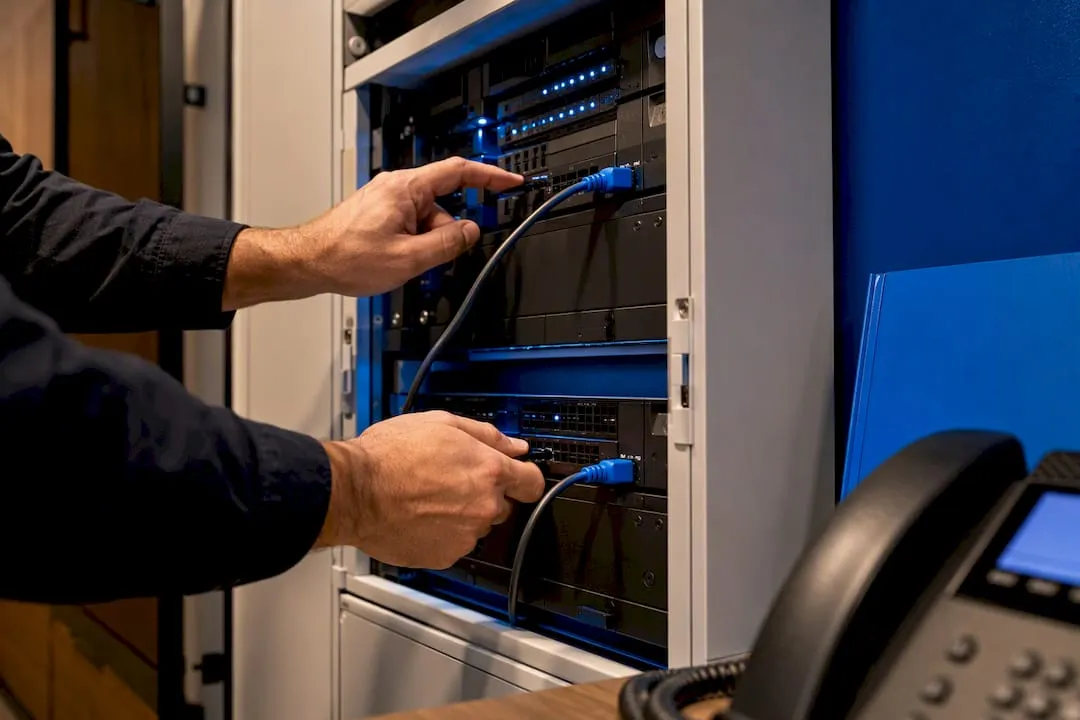
Yes, you can keep your business number when you switch providers, and Ofcom’s rules exist specifically to protect that right. The process is called porting, not forwarding, and it starts with picking a new provider that can handle your number type. Once they confirm that, your job is to collect the right authorisation code and let the transfer run.
TL;DR:
- Porting a business number transfers ownership permanently, unlike forwarding, which keeps the number with the old provider and depends on their cooperation.
- Mobile ports require a PAC issued within one day, while landlines and VoIP numbers need a signed LOA, with porting times ranging from one day to several days or weeks.
- Accurate matching of account details and proper labeling of codes are crucial to avoid delays, and testing the number immediately after port completion ensures no call loss.
- Providers should confirm they support your number type, their typical port timeframe, required documents, and handling of bulk ports before you sign.
- Common issues causing delays include mismatched account info, overlooked contract terms, and uncooperative providers, but legal rights protect you against unreasonable refusals.
Table of Contents
- How to switch phone carriers and keep your number under UK rules
- Step-by-step: porting your business number without losing calls
- What changes when you move a number to a hosted VoIP system
- What to ask before you sign with a new provider
- Common porting problems and how to fix them
- Why porting business numbers is rarely the problem people expect
- Search, rent or port your number with confidence
- Sources
- FAQ
How to switch phone carriers and keep your number under UK rules
Ofcom’s General Condition B3 and C7 give UK businesses a genuine legal right to retain a phone number when moving providers, as long as porting is technically feasible. Your current provider (the “donor”) cannot lawfully refuse to release your number just because you’re leaving, nor can they drag the process out indefinitely. Porting must happen on reasonable terms, and pricing has to be cost-oriented rather than punitive.
That right only means something if you understand what porting actually does. Porting permanently transfers ownership of the number to your new provider. Forwarding or hosting is different: the number physically stays with the old provider, who simply redirects calls elsewhere. It looks similar to a customer, but you’re still dependent on the donor’s goodwill and billing. If they go bust, change terms, or simply get slow, your number is at risk.
Three codes govern the switch, and mixing them up is the single most common cause of delay:
- PAC (Porting Authorisation Code) — used for mobile numbers, and the donor must issue it within one working day of your request.
- LOA (Letter of Authority) — the standard route for business landlines and VoIP numbers, giving your new provider written permission to request the transfer on your behalf.
- STAC (Service Termination Authorisation Code) — used when you’re closing a line entirely rather than moving it to a new provider.
Get the right one for the right number type, and the rest of the process moves far more smoothly.
Step-by-step: porting your business number without losing calls
Porting a single number is straightforward once you know the order of operations. Porting several at once, as many taxi firms and small fleets discover, needs a bit more discipline.
- Pick a recipient provider that actually supports your number type. Not every provider ports every range with the same ease, and non-geographic or premium numbers sometimes need extra handling, so confirm this before you sign anything.
- Gather your supporting documents. You’ll typically need a recent bill, your registered business name exactly as it appears with the donor, and your service address. Mismatches here are the number one cause of rejected requests.
- Request the right code. Mobile lines need a PAC, which your donor must supply within one working day under C7. Landline and VoIP numbers need a signed LOA instead.
- Submit the code or LOA to your new provider and agree a port date. Ask them to confirm it in writing.
- Expect a short outage on transfer day. Mobile ports often complete within a single working day. Landline-to-VoIP ports typically take five to ten working days, with a brief window, sometimes just minutes, where calls may not connect.
- Test immediately after the port completes. Call the number from another line, check voicemail, and confirm any call routing or hunt groups have carried over correctly.
- Keep your old service live until the port is verified. Cancelling early, before you’ve confirmed calls are landing correctly, is how businesses lose calls for no good reason.
If you’re moving several numbers at once, label each PAC or LOA against the number it belongs to before submission. A single mislabelled code in a batch of twenty can hold up the entire group.
Pro Tip: Run a pilot port on one low-risk number first if you’re moving a whole fleet or office at once. It surfaces documentation mismatches and routing quirks before they can affect your main line.
What changes when you move a number to a hosted VoIP system
A hosted number, sometimes called a virtual number, is assigned by a VoIP provider and routes calls over the internet rather than down a physical copper line. That distinction matters once you’ve ported: you’re no longer tied to a location, a handset, or a single piece of hardware to receive calls on your business number.
Before you commit, confirm a few technical points with your new provider:
- Call routing and conveyance settings — how calls reach you matters as much as whether they connect at all, and misconfigured routing is where most post-port call quality complaints originate.
- Simultaneous ring or hunt groups — if several staff need to answer the same number, check this is set up correctly before go-live, not after.
- CRM integration — many hosted platforms can log or pop calls into existing software; worth setting up during the port rather than retrofitting later.
- SIM and eSIM considerations — if you’re also moving a mobile line into a hosted setup, confirm how that interacts with existing handsets.
Done properly, hosting a ported number lets you present a local, memorable number to customers no matter where your team actually sits, and scale up call handling without buying a single extra handset.
What to ask before you sign with a new provider
A short conversation before you commit saves weeks of frustration later. Confirm these points directly with the provider, in writing where possible:
- Can they port your exact number type, and are there any fees attached to the process itself?
- Who submits the LOA or PAC — you, or them on your behalf?
- What’s their typical port timeframe for your number type specifically, not a generic average?
- Exactly which documents do they need, and how must your account name and address match the donor’s records?
- What’s the agreed port date, expected outage window, and their plan if something goes wrong on the day?
- How do they handle bulk ports if you’re moving more than one number, and will they run a pilot first?
Pro Tip: Ask specifically whether they’ve ported numbers from your current provider before. Some donor-recipient combinations have known quirks, and a provider who’s seen yours before will flag it upfront rather than discover it mid-transfer.
Common porting problems and how to fix them
Most failed or delayed ports trace back to a handful of avoidable causes, not unlawful refusal:
- Mismatched account details. The name, address, or account reference on your port request must match the donor’s records exactly. Fix it by requesting a recent bill and copying the details verbatim.
- Overlooked contract terms. Your right to port doesn’t cancel any early termination fees you agreed to with your current provider, so check your contract before you commit to a date.
- Bulk port coordination errors. Assign one person to manage the process, label every code against its number, and stage a pilot transfer before moving the whole batch.
- Unreasonable delay from the donor. If your current provider drags out the process or refuses without lawful cause, you can raise it directly with Ofcom, citing your rights under C7 and B3.
Why porting business numbers is rarely the problem people expect
Most of the anxiety around switching providers comes from a misunderstanding, not a genuine technical hurdle. Businesses picture losing their number entirely, when in reality the regulatory framework is firmly on their side. The real risk isn’t Ofcom’s rules failing you. It’s a mismatched address on a form, or a contract clause nobody read before signing.
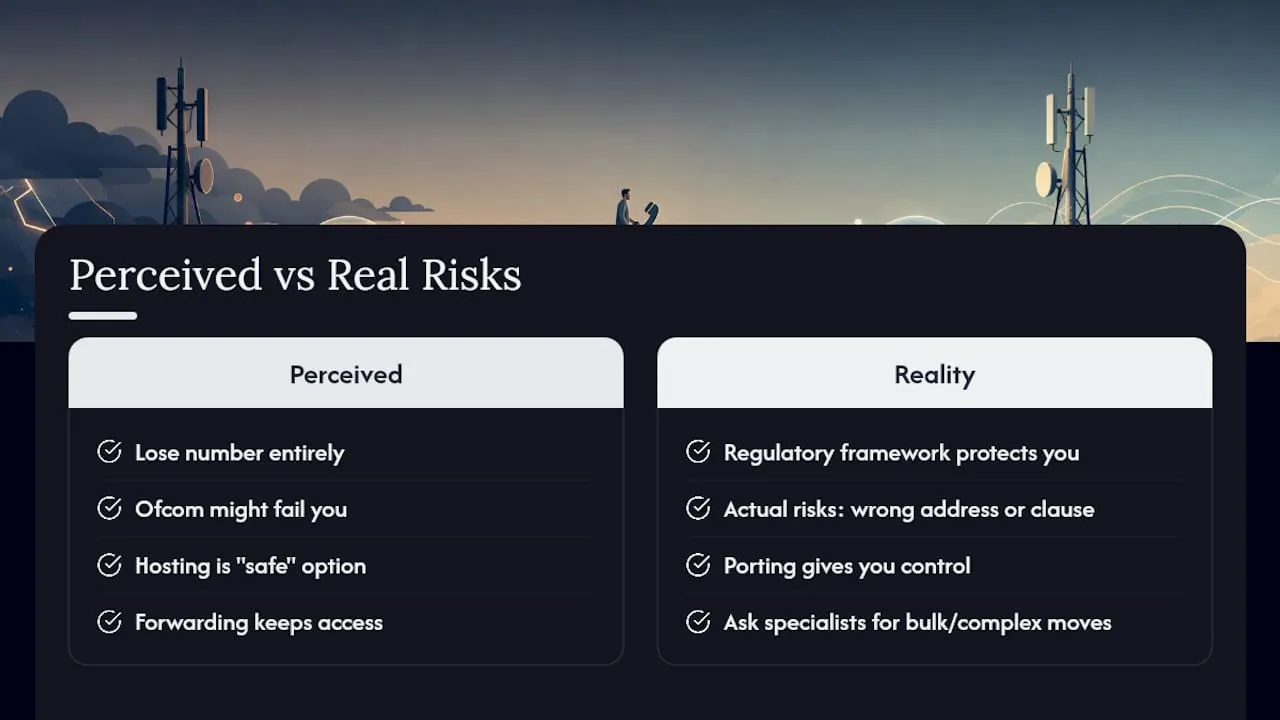
What I’d push back on is the idea that hosting a number is somehow the “safe” option and porting is the “risky” one. It’s the opposite for anything you consider a core business asset. Forwarding leaves you dependent on a provider you’re actively trying to leave. Porting puts the number properly in your control, at your new provider, on your terms. If you’ve bought or rented a memorable number specifically to build brand recognition, that distinction isn’t academic.
Phonenumbers.store’s database exists precisely because number selection and port-in shouldn’t be separate problems handled by separate people. If you’re weighing up a bulk move or a number that needs particular care, get in touch with the team directly rather than guessing your way through it.
— Rob
Search, rent or port your number with confidence
Switching providers shouldn’t mean gambling with the number your customers already know. Phonenumbers gives UK businesses and sole traders a searchable database of memorable 01, 02, 07, 03 and 08 numbers, with hosting, forwarding and porting support built in rather than bolted on as an afterthought.
Whether you’re renting a new number to launch a second location or porting an existing one away from a provider that’s stopped serving you well, Phonenumbers can manage the LOA and PAC paperwork and talk you through realistic timelines so you’re not caught out by an unexpected outage window. That’s the practical difference: you get a number and someone who actually handles the transfer with you, rather than a code emailed to you with no further support. Search available numbers or get in touch to start your porting request today.
Sources
- General conditions — C7: switching and number porting
- How to keep business phone number when switching
- What is a hosted number?
FAQ
Can I keep my business number if I switch providers?
Yes. Ofcom’s General Conditions B3 and C7 give UK businesses the right to port their number to a new provider, provided the transfer is technically feasible.
What’s the difference between porting and forwarding a number?
Porting permanently transfers ownership of the number to your new provider; forwarding or hosting leaves the number with your old provider, who simply redirects calls on your behalf.
Do I need a PAC or an LOA to switch?
Mobile numbers need a PAC, which your donor provider must issue within one working day; business landlines and VoIP numbers typically need a signed LOA instead.
How long does porting a business number take?
Mobile ports often complete within one working day, while landline-to-VoIP ports usually take several working days, often about a week or more., with a brief outage window on the transfer date.
What should I do if my current provider won’t release my number?
Check your account details match exactly first, since mismatches cause most delays, and if the donor still refuses or stalls unreasonably, escalate the issue to Ofcom citing your rights under C7 and B3.