TL;DR:
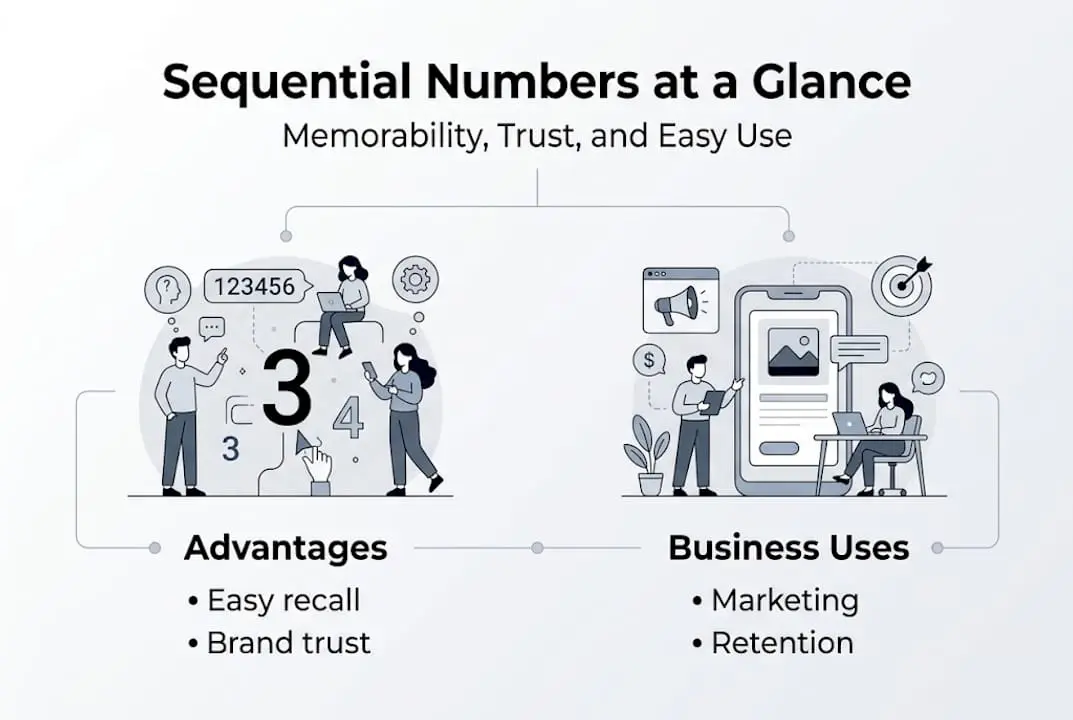
- Sequential phone numbers are highly memorable and boost customer recall by up to 30 percent.
- They can increase inbound calls and brand recognition, especially with freephone formats.
- No special regulation is needed; these numbers are traded like standard non-geographic or mobile numbers.
A single phone number can be the difference between a customer remembering your business or forgetting it entirely. Sequential phone numbers, where digits follow a logical order such as 123456, are one of the most powerful yet overlooked tools in UK small business marketing. Sequential numbers improve brand recognition and increase customer engagement, giving businesses a genuine competitive edge. In this guide, we break down exactly what sequential phone numbers are, why they work so well psychologically, how to acquire them within UK regulations, and how to put them to work across your marketing channels.
Table of Contents
- Defining sequential phone numbers and their forms
- Why sequential phone numbers boost recall and engagement
- Navigating UK regulations and acquisition channels
- Strategic use of sequential phone numbers in UK business marketing
- Why sequential numbers are underrated assets for UK SMBs
- Get a sequential phone number for your business
- Frequently asked questions
Key Takeaways
| Point | Details |
|---|---|
| Easy recall advantage | Sequential phone numbers help customers remember your business up to 30% more easily. |
| Increased inbound calls | UK businesses using sequential or structured phone numbers see up to 40% more calls and sales. |
| Regulatory clarity | Sequential numbers have no special Ofcom category and are acquired via standard and secondary markets. |
| Asset and marketing value | Premium sequential numbers serve both as branding assets and appreciating business resources. |
Defining sequential phone numbers and their forms
A sequential phone number is one where the digits follow a clear, predictable pattern. The most obvious example is a number ending in 123456, but the category is broader than that. You also have reverse sequential numbers such as 654321, and block sequences where a business holds a range of numbers running consecutively, for example 0161 222 2234 through to 0161 222 2236.
It is worth understanding how these differ from other memorable formats:
- Sequential numbers follow a logical ascending or descending order across some or all digits.
- Repeated digit numbers use a single digit multiple times, such as 0800 333 333.
- VIP numbers are premium, highly sought-after combinations that may include sequences, repetitions, or culturally significant digits. You can explore VIP mobile numbers as a complementary option to sequential formats.
- Random numbers have no discernible pattern and are the hardest for customers to retain.
The National Numbering Plan governs how UK phone numbers are allocated, but as telecoms regulation clarifies, sequential numbers sit within standard non-geographic or mobile classifications with no special Ofcom category. That means the market, not a regulator, determines their value and availability.
| Format | Example | Memorability | Typical use case |
|---|---|---|---|
| Sequential | 0113 123 456 | Very high | Taxis, trades, retail |
| Reverse sequential | 0113 654 321 | High | Agencies, services |
| Block range | 0113 222 2234 to 2236 | High | Multi-line teams |
| Repeated digit | 0800 333 333 | Very high | Freephone campaigns |
| Random | 0113 748 2916 | Low | Default allocation |
If you are thinking about acquiring local numbers for your team, a block sequential range is worth considering because customers can intuitively guess your other lines.
Pro Tip: Combine a sequential ending with a recognisable area code to get the best of both worlds. A number like 0161 234 5678 ties your business to a familiar location whilst the ending does the memory work.
Why sequential phone numbers boost recall and engagement
Human memory favours patterns. This is not a marketing trick; it is how our brains are wired. When a number follows a logical structure, our minds store it more efficiently, making it far easier to recall hours or even days after first seeing it.
The business impact of this is measurable. Sequential numbers yield up to 30% higher recall and 40% more inbound calls compared to random number formats. For a small business running a radio advert or a van wrap, that difference in recall can translate directly into revenue.
“Customers are 75% more likely to recall a structured number sequence after a single exposure compared to a random digit string.”
Consider the industries where this matters most:
- Taxi and private hire firms where customers need to call quickly and often from memory
- Estate agents who plaster numbers across boards and need instant recognition
- Trades and local services relying on word-of-mouth referrals where the number gets passed on verbally
- Restaurants and takeaways where repeat custom depends on easy recall
| Number type | Recall rate | Inbound call uplift |
|---|---|---|
| Sequential | Up to 30% higher | Up to 40% more |
| Repeated digit | Up to 25% higher | Up to 30% more |
| Random | Baseline | Baseline |
The benefits compound when sequential numbers are paired with freephone formats. Learning about how memorable numbers increase call-ups explains this synergy clearly. A freephone 0800 number removes the cost barrier for callers, while a sequential ending removes the memory barrier. The two together are particularly effective for customer service lines and national campaigns.
Another advantage is brand trust. A structured, professional-looking number signals that a business is established and credible. The benefits of UK-wide numbers extend beyond geography, and pairing that with a sequential format strengthens overall brand perception. Sequential numbers also work well as dual-purpose numbers, serving both inbound enquiries and outbound caller ID simultaneously.

Navigating UK regulations and acquisition channels
One of the most common points of confusion is whether sequential phone numbers require any special regulatory approval. The short answer is no. Ofcom does not have a dedicated sequential category; these numbers are traded as standard non-geographic or mobile numbers through premium channels.
This means the process for acquiring one is straightforward, though the search can take time depending on what sequence you want. Here is how UK small businesses typically go about it:
- Search specialist providers such as phonenumbers.store, which hold curated inventories of memorable number combinations including sequential formats.
- Use secondary markets where businesses resell numbers they no longer need. Premium sequences often appear here, sometimes at significant prices.
- Request a block range from a provider if you need multiple lines for a team. A block of sequential numbers means your whole office shares a recognisable pattern.
- Check the Ofcom number regulations to confirm your chosen number type is appropriate for your intended use, whether inbound only, outbound, or both.
- Port your existing number if you already have a non-sequential number but wish to retain it alongside a new sequential one for marketing purposes.
For detailed guidance, the step-by-step acquisition process walks through every stage. It is also important to think about how your number will function in a customer-facing role. The right format for a customer service line differs from what works best for a direct sales campaign.
Pro Tip: Before purchasing, check whether the sequence you want is available as both a landline and a matching mobile number. Holding both means you control the pattern across all channels, which prevents a competitor from snapping up the mobile equivalent.
Key regulatory considerations to keep in mind:
- No special licence is required to hold a sequential number
- Market pricing applies, meaning popular sequences command a premium
- Numbers are no longer tied to local areas, so a Leeds 0113 number can be used by a business based anywhere in the UK
- Ensure your provider is Ofcom-registered to avoid compliance issues
Strategic use of sequential phone numbers in UK business marketing
Acquiring the number is only half the work. How you deploy it across your marketing determines how much return you actually see. Sequential numbers are versatile assets that work across nearly every channel a UK small business uses.
The most immediate wins come from high-visibility placements:
- Vehicle livery and signage where a driver or passer-by has only seconds to register the number
- Print advertising in local papers, directories, and leaflet drops where the number must stick after a single glance
- Radio and audio where the sequence can be spoken rhythmically, making it far easier to remember
- Social media profiles and bios where a clean, structured number looks more trustworthy than a random string
- Google Business Profile where your number is one of the first things a local searcher sees
Pairing a sequential number with an 0800 freephone format is one of the most effective strategies available. Understanding how freephone numbers drive sales reveals that removing call cost anxiety can significantly lift conversion rates, especially for higher-value services.
On the cost side, premium sequential numbers can range from a few hundred to several thousand pounds depending on the sequence and format. The ROI on memorable numbers is well documented: increased call volume, stronger brand recall, and the number itself functioning as an appreciating business asset. Staying across UK phone number trends also helps you make smarter purchasing decisions before demand pushes prices higher. As the article highlights, the cost premium is consistently offset by long-term ROI on call volume and asset appreciation.
Pro Tip: Run seasonal campaigns using your sequential number as the centrepiece. A Christmas radio spot built around “call us on 0113 123 4567” is far more likely to be retained than a random number, and you can reinforce it across WhatsApp Business, SMS marketing, and social adverts simultaneously.
Why sequential numbers are underrated assets for UK SMBs
Most business owners think of a phone number as a utility, something functional that sits on a website footer and does the job. That framing sells the asset short by a wide margin.
A well-chosen sequential number is more like a piece of intellectual property. It has scarcity value because only one business can hold it. It appreciates over time as demand for premium numbers grows. And it transfers with the business if you ever sell, potentially adding tangible value to the sale price. Long-term value as appreciating assets is increasingly recognised by savvy UK SMB owners who treat number acquisition the way they treat domain name purchases.
We have seen businesses hold onto a sequential number through rebrands, relocations, and ownership changes because the number itself had become more valuable than the marketing materials around it. That is a fundamentally different way of thinking about telephony, and it is the right one. If you are serious about growth, retaining numbers for asset value deserves a place in your long-term business strategy, not just your next ad campaign.
Get a sequential phone number for your business
If this article has shifted how you think about your phone number, the next step is straightforward. Browse the phonenumbers.store database to search by sequence, area code, or town, and find a number that works for your brand and your budget.
Whether you want a clean ascending sequence, a reverse format, or a block range for your whole team, we have options across 01, 02, and 07 formats. Numbers like 01132 666333 and 01132 777999 show exactly the kind of structured, memorable combinations that make a real difference. Visit phonenumbers.store today to search the full inventory and secure your sequential number before someone else does.
Frequently asked questions
How do I acquire a sequential phone number in the UK?
You can buy or rent sequential numbers from specialist providers or secondary markets, as Ofcom treats them as standard non-geographic or mobile numbers with no special allocation process.
Are sequential phone numbers more effective than random numbers for marketing?
Yes, sequential numbers are up to 30% more memorable and can increase inbound calls by 40% compared to random formats, making them a measurably better choice for marketing.
Is there a specific UK regulation for sequential phone numbers?
There is no dedicated regulatory category; sequential numbers are allocated and traded according to standard Ofcom rules and market pricing, the same as any other non-geographic or mobile number.
What is the cost range for acquiring a premium sequential phone number?
Prices typically range from hundreds to thousands of pounds depending on memorability and demand, but long-term asset value and increased call volume consistently justify the investment for growing UK businesses.