
If a number starts with 01 or 02 it is geographic, 07 means mobile, and 03 or 08 marks it as non-geographic, so the first step is checking Ofcom’s numbering files to confirm the block’s allocation status. That data only shows whether a block is free or allocated, never whether a specific memorable number is sitting unused, so the fastest real answer comes from searching a provider database or requesting a 30-day reservation.
TL;DR:
- Checking Ofcom’s numbering files provides only a broad view of whether a number block is free or allocated; it does not reveal if a specific number is currently unused.
- To verify if a memorable number is available, contact the provider directly to search their inventory or request a reservation, which typically lasts 30 days.
- Reserve a number promptly because memorable sequences do not stay available for long, and delays may result in losing the ideal pattern.
- Opt for 03 numbers over 08 when aiming for a national-sounding number that costs callers the same as a local call, reducing customer resistance.
- Confirm porting details and get written proof of porting dates before cancelling existing call-forwarding arrangements to prevent service gaps during transfers.
Table of Contents
- How UK number ranges work and why prefix matters for branding
- What Ofcom’s public data shows and how to use it
- How to check whether a specific memorable number is available
- How to choose the right number pattern and prefix for branding and recall
- Reserve, buy or rent the number and port it: a practical checklist
- A straight answer from someone who has watched this go wrong
- Search, reserve and secure your number with Phonenumbers
- FAQ
- Sources
How UK number ranges work and why prefix matters for branding
Every UK number tells you something before anyone answers the phone. Numbers beginning 01 or 02 are geographic, tied historically to a town or city, though Ofcom confirms they can now be used from anywhere. Numbers starting 07 are mobile. The 03 and 08 ranges are non-geographic, designed for businesses that want one number across multiple sites or regions.
The prefix shapes how customers perceive a business and how much a call costs them. According to Gov, 03 numbers are charged at the same rate as a standard geographic call, whether from a landline or mobile, while some 08 numbers can carry extra charges on top of the caller’s usual rate. That difference matters when you are choosing between a number that looks national and one that might make a customer think twice before dialling.
- Geographic (01/02) numbers suit businesses that want a visible local identity.
- Mobile (07) numbers work well for sole traders who answer their own calls.
- Non-geographic (03/08) numbers suit multi-location businesses wanting one consistent contact point.
Pro Tip: Choose 03 over 08 when you want a national-sounding number without risking customer resistance to higher call charges.
What Ofcom’s public data shows and how to use it
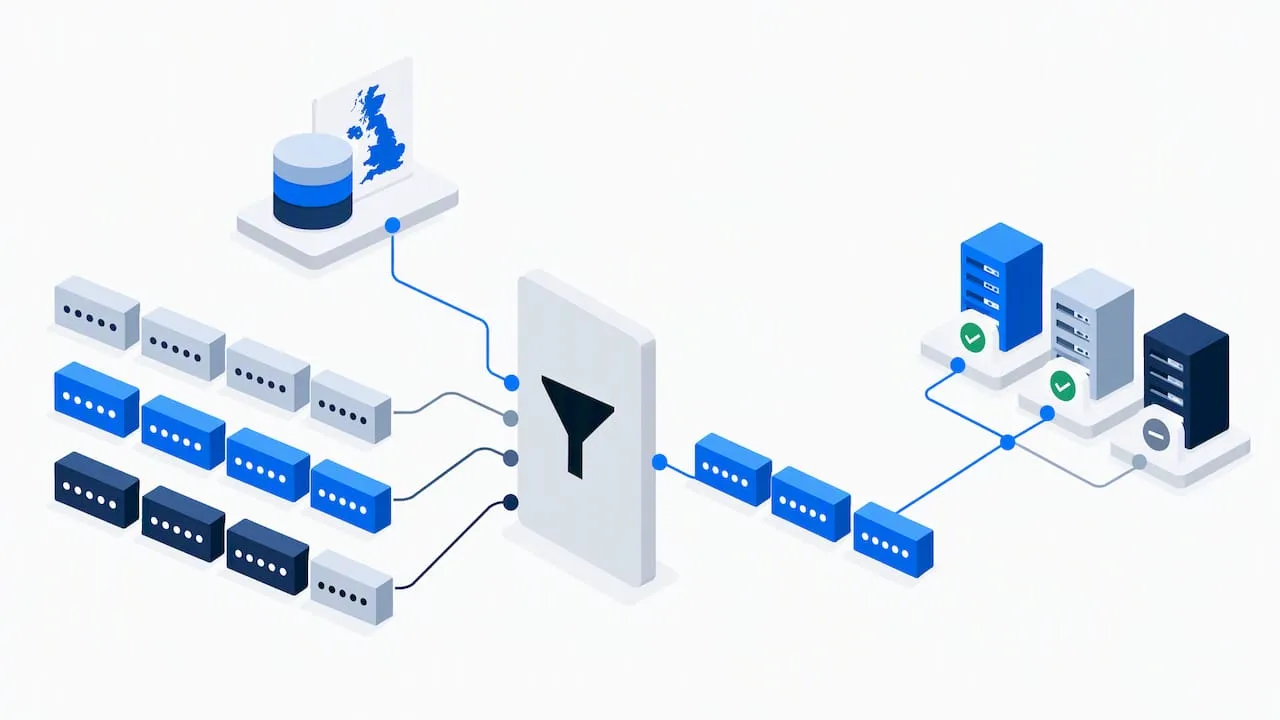
Ofcom maintains a set of numbering files, commonly referred to as the S1, S3 and S7 files, that record which number blocks across the UK have been handed to communications providers. These files are published through Ofcom’s telecoms numbering page and updated on a weekly cycle, giving a current picture of block-level allocation.
Using them is straightforward in principle:
- Download the relevant .csv or .xlsx file for the prefix range you are interested in.
- Search the file for the specific block covering your target number.
- Check whether that block is marked “Free” or “Allocated” to a provider.
An Ofcom Freedom of Information response confirms that Ofcom does not collect data on the use of individual phone numbers. That single fact explains why the S-files only ever answer half the question: they tell you a block exists and who holds it, never whether the specific memorable sequence inside that block is sitting idle or already issued to a customer.
How to check whether a specific memorable number is available
Once you know a block is allocated, the number itself lives inside that provider’s own inventory system. Ofcom has no visibility into which individual numbers within an allocated block are in use, so the only reliable check happens at provider level.
The practical sequence looks like this:
- Search a provider’s online database for the exact number or pattern you want.
- Call or email the provider directly if the number does not appear in search results but you believe it may still be free.
- Ask for a short reservation, commonly 30 days, to hold the number while you arrange payment and porting paperwork.
- Confirm who technically owns the number once issued, and under what terms it can later be ported away.
When you do speak to a provider, come prepared with specific questions: how long will the reservation last, can the number be ported to another carrier later, are there set-up fees beyond the reservation charge, what routing options exist for forwarding calls, and can you retain control over the caller line identity shown to customers.
Pro Tip: Always ask whether a reservation fee is deducted from the final purchase price or charged separately, since providers handle this differently.
How to choose the right number pattern and prefix for branding and recall
A memorable number only helps your business if customers actually remember it. Four criteria matter most when comparing candidates: how memorable the digit pattern is, what the prefix signals about your business, what the call costs the person dialling, and whether the number can be ported and configured the way you need technically.
A quick scoring checklist helps narrow a shortlist fast:
- Does the pattern include repeated digits, a sequence, or a rhythm that is easy to say aloud?
- Does the prefix match how customers expect to reach you, local, mobile or national?
- Will the caller pay a standard rate, or could an 08 range put some customers off?
- Can the number be ported to your preferred provider and configured for call forwarding or a hosted voice system?
A local plumber or locksmith often benefits from a geographic 01 or 02 number that signals a nearby presence. A delivery or courier business covering several regions might prefer an 03 number for a national feel without the caller-cost penalty some 08 ranges carry. A sole trader who takes calls on the move may simply want a clean, memorable 07 number.
Reserve, buy or rent the number and port it: a practical checklist
Once you have found a number worth securing, moving quickly matters, because memorable sequences do not stay free for long. The process generally runs in three stages.
- Reserve the number. A short hold, often 30 days, gives you time to complete paperwork without losing the number to another buyer.
- Confirm porting details. If you are moving the number from another provider, ask about required documents, expected timelines, and whether a Non-Portable Porting Code or transit arrangement applies between carriers, since Ofcom’s porting and transfer data tracks these transfers between providers.
- Set up the technical side. Decide whether you need hosted voice, SIM-based mobile provisioning, call forwarding to an existing line, or integration with a VoIP system that includes AI voice agents.
Porting rarely happens instantly, so ask your provider directly whether inbound calls could fail during the switchover and whether a temporary routing arrangement can bridge any gap. Businesses that rely on specialist SIP trunking and number porting services often build in failover routing precisely to avoid this kind of downtime.
Pro Tip: Ask your provider for written confirmation of the porting date before cancelling any existing call-forwarding arrangement.
A straight answer from someone who has watched this go wrong
Businesses lose good numbers by hesitating. The pattern looks perfect, the price seems fair, then a week passes while someone checks with a business partner, and the number is gone. The common mistakes are predictable: picking an 08 number without checking caller cost, leaving porting paperwork until the last minute, or choosing a pattern that looks clever on paper but is awkward to say over the phone. My advice is blunt: run the database search today, and reserve your top candidate before you do anything else.
— Rob
Search, reserve and secure your number with Phonenumbers
We built our searchable database so you can check a prefix, pattern or area code in one place instead of chasing multiple providers. Numbers can often be held with a 30-day reservation, giving you time to sort payment and porting without losing them to someone else.
- Search by number, sequence, area code, town or county.
- Reserve a candidate number for 30 days while you finalise details.
- Buy outright or rent, with support available for porting and call setup.
Whether you need a geographic 01 number, a national 03 range, or a memorable mobile number, you can start your search now and reserve the one that fits your business.
FAQ
What does a phone number’s prefix tell you?
The prefix identifies the number type: 01 and 02 are geographic, 07 is mobile, and 03 and 08 are non-geographic ranges. Gov.uk’s call charges guidance confirms these categories and how each is typically billed to the caller.
Does Ofcom show whether a specific number is available?
No. Ofcom’s own FOI response confirms it does not collect data on individual number use, only block-level allocation. Checking whether one memorable number is free means querying a provider’s own inventory directly.
How long can you reserve a memorable number before buying it?
Reservation periods vary by provider, but a 30-day hold is a common arrangement that gives a business time to arrange payment and porting. We offer a 30-day reservation on numbers found through our search tool.
Is an 03 number better than an 08 number for a business?
For most customer-facing lines, yes, because Ofcom’s guidance on call costs notes that 03 numbers are charged at the same rate as a standard geographic call, while some 08 ranges can carry additional charges. That difference can affect how willing customers are to call.
Can you keep a memorable number if you switch providers?
Yes, UK numbers are portable between providers, though the process involves some administrative steps and a short transition window. Confirming porting timelines and any transit requirements with both your old and new provider in advance helps avoid a gap in service, as outlined in our guide on choosing and keeping a UK number.