
TL;DR:
- A location-neutral number is a VoIP-based phone number that operates independently of any fixed geographic address. It allows businesses to make and receive calls from anywhere with an internet connection while maintaining a local area code.
A location-neutral number is a telephone number that operates independently of any fixed geographic area, letting you make and receive calls from anywhere with an internet connection. The industry standard term for this is a non-fixed VoIP number, though “location-neutral” and “location-independent phone number” are widely used to describe the same concept. Phonenumbers, the UK’s leading provider of memorable 01, 02, and 07 numbers, recognises that these numbers are no longer tied to local areas. Whether you run a distributed team, work remotely, or want a consistent UK number without a fixed office, understanding this technology is the first step to using it well.
What is a location-neutral number and how does it differ from other types?
A location-neutral number is defined as a phone number provisioned through cloud infrastructure rather than a physical telephone line at a specific address. The number carries no binding to a single premises, town, or exchange. This contrasts sharply with traditional location-based numbers and mobile numbers, each of which carries its own rules and limitations.

Location-based numbers are the classic 01 and 02 landline numbers most UK businesses have used for decades. Ofcom assigns these area codes to specific geographic regions. A 0113 number signals Leeds; a 0161 signals Manchester. Historically, the number only worked at the physical address registered to it. That constraint made sense when calls travelled down copper wires to a fixed socket.
Mobile numbers carry the 07 prefix in the UK. They follow the SIM card, not a location, so they are already more flexible than landlines. However, they carry a personal rather than business connotation, and call costs for callers can be higher depending on their tariff.
Location-neutral numbers break the geographic link entirely. Non-fixed VoIP numbers are provisioned without linkage to a verified physical address and routed through cloud infrastructure. A business can hold a 0115 Nottingham number and answer it from Edinburgh, Lisbon, or a home office in Cornwall. The caller sees a familiar UK area code; the recipient answers on any internet-connected device.
| Number type | Geographic tie | Typical use | Technology |
|---|---|---|---|
| Location-based (01/02) | Fixed to area code region | Local businesses, offices | Traditional PSTN or fixed VoIP |
| Mobile (07) | Follows SIM card | Personal, field workers | GSM/4G/5G |
| Location-neutral | None | Remote teams, multi-site businesses | Non-fixed VoIP, cloud telephony |
The practical difference matters most when your team moves, grows, or works across multiple sites. A location-based number requires a physical installation at each new address. A location-neutral number requires nothing more than an internet connection.
What are the main benefits of a location-neutral number?
The benefits of location-neutral numbers extend well beyond simple convenience. They reshape how businesses manage costs, continuity, and customer perception.
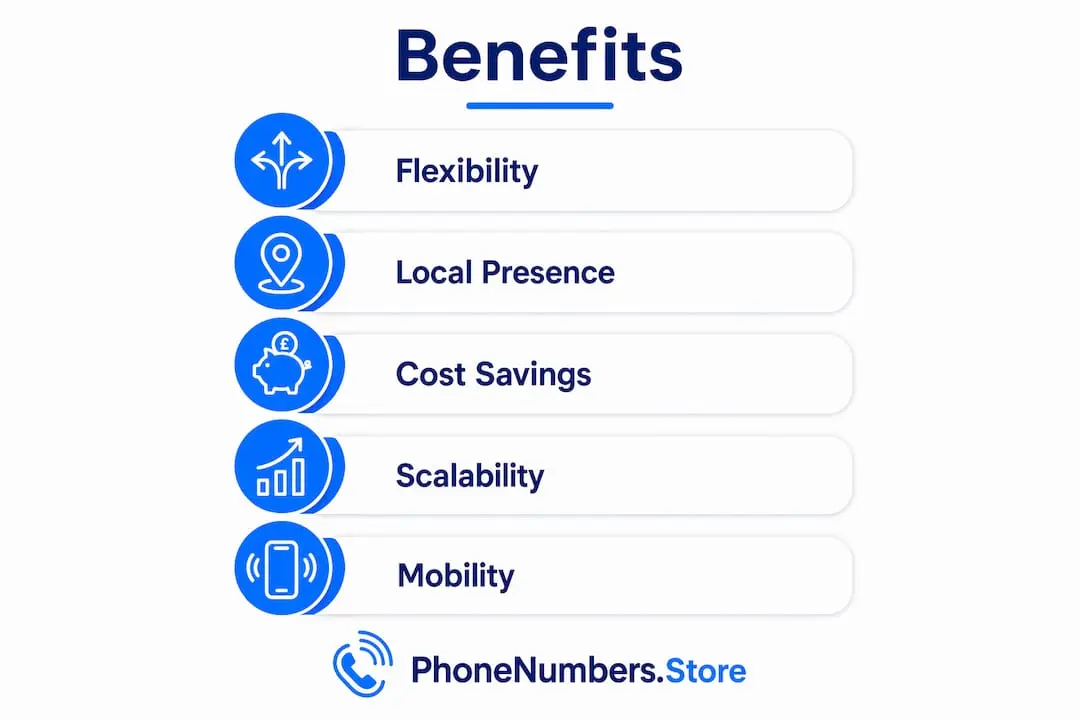
- Flexibility from anywhere. Virtual phone numbers allow teams to make and receive business calls securely from any device with an internet connection. A sales manager travelling between client sites answers the same number as the receptionist in the office.
- Faster scaling. Businesses can add new lines in minutes rather than waiting days or weeks for physical hardware installation. That speed matters when you hire quickly or open a new service line.
- Operational resilience. Calls route through the cloud, so a power outage or local disruption at one site does not cut off your phone system. Teams redirect to home devices or a backup site without changing the number customers dial. Read more about how this works in practice in Phonenumbers’ guide to business continuity and phone numbers.
- Cost efficiency. Traditional multi-site phone systems require separate lines, hardware, and maintenance contracts at each location. A cloud-based number consolidates that into a single managed service. Phonenumbers covers this in detail in their piece on expanding with virtual numbers.
- Local branding without a local office. Businesses can obtain numbers with local area codes and list them in online directories, creating a credible local presence in multiple markets without opening physical premises.
Pro Tip: If your business operates in several UK cities, consider holding a location-neutral number for each area code you serve. Customers in Leeds see a 0113; customers in Nottingham see a 0115. The call routes to the same team regardless.
How do location-neutral numbers work technically?
Location-neutral numbers rely on Voice over Internet Protocol, commonly called VoIP. Instead of transmitting voice as electrical signals over copper wire, VoIP converts speech into data packets and sends them across the internet. The result is that the number’s behaviour is governed by software, not by physical infrastructure at a fixed address.
The distinction between fixed and non-fixed VoIP is worth understanding. Fixed VoIP numbers are tied to a verified physical address, which makes them easier to align with emergency call requirements. Non-fixed numbers have fewer address requirements, though the rules vary by country. In the UK, Ofcom regulations govern how 01 and 02 numbers are assigned and ported, but the numbers themselves can now be used from any location once provisioned.
Call routing works as follows:
- A caller dials your number from any phone or device.
- The call enters the provider’s cloud platform rather than a physical exchange tied to your address.
- The system applies routing rules at call time to determine where the call should go, whether that is a mobile, a desktop app, a VoIP handset, or a call centre queue.
- The recipient answers on their chosen device, anywhere with internet access.
- The caller’s experience is identical to dialling a traditional landline.
One regulatory consideration deserves attention. Emergency services in the UK use the registered address of a fixed line to locate callers who cannot speak. With a non-fixed VoIP number, that automatic location data may not be available. Businesses should inform staff and configure their provider’s emergency call settings accordingly.
How to use location-neutral numbers effectively
Choosing the right number and deploying it well makes the difference between a communication upgrade and a confusing mess of forwarded calls.
Choosing a provider and number. Phonenumbers offers a searchable database of UK 01, 02, and 07 numbers by area code, town, or number sequence. You can select a memorable number that matches your brand or target region, then use it from any location. The benefits of local numbers for professional firms are well documented, particularly for building trust with regional customers.
Inbound versus outbound strategy. Location-neutral numbers work best as inbound numbers for customer service and support lines. For outbound sales, local presence numbers yield higher pick-up rates than generic national numbers. The practical approach is to separate your inbound number, which builds brand consistency, from the outbound number your sales team dials from, which matches the region of the prospect.
Common use cases include:
- Remote and hybrid teams who need a single business number across multiple home offices
- Freelancers who want a professional UK number without a physical office
- Small businesses building a local presence in a new city before committing to premises
- Customer service teams handling calls from multiple regions under one roof
Common pitfalls to avoid. Do not assume all VoIP providers handle number porting with the same speed or reliability. Check that your provider supports Ofcom-regulated number porting if you are moving an existing number. Also confirm how the provider handles call quality during peak internet usage, as VoIP call quality depends on bandwidth.
Pro Tip: For outbound sales campaigns, use a dedicated local presence number that matches the area code of the prospects you are calling. Keep your main location-neutral number reserved for inbound customer contact, where brand consistency matters most.
Key takeaways
A location-neutral number gives businesses and individuals a consistent, professional UK phone presence that works from any location, without physical lines or fixed addresses.
| Point | Details |
|---|---|
| Definition | A location-neutral number is a non-fixed VoIP number not tied to any physical address or geographic area. |
| How it works | Calls route through cloud infrastructure, reaching any internet-connected device regardless of location. |
| Key benefit | Teams can scale, relocate, or work remotely without changing their phone number or losing continuity. |
| Inbound vs outbound | Use location-neutral numbers for inbound branding; use local presence numbers for outbound sales to improve pick-up rates. |
| UK relevance | Ofcom-regulated 01 and 02 numbers can now be used from anywhere, making them ideal location-neutral options. |
Why location-neutral numbers matter more than most businesses realise
The shift to remote and hybrid working has made location-neutral telephony less of a niche product and more of a baseline requirement. What surprises me, having worked with businesses on their communication setups for years, is how many still treat their phone number as a fixed asset rather than a flexible tool.
The conventional wisdom says: get a local number for local credibility. That is still true. But the assumption underneath it, that the number must be physically anchored to that location, is outdated. A Leeds business can hold a 0113 number and run its entire operation from a distributed team. The number signals local presence; the technology handles the rest.
What I find genuinely underused is the inbound and outbound split. Most businesses run one number for everything. Separating a stable, branded inbound number from a rotating set of local outbound numbers is a tactic that larger call centres have used for years. Smaller businesses rarely apply it, and they leave real engagement gains on the table.
The regulatory picture in the UK is also evolving. Ofcom continues to review how non-geographic and VoIP numbers are classified and protected. Businesses that build their communication infrastructure on reputable, Ofcom-aware providers now will avoid the disruption of forced migrations later. Choose a provider that takes number portability and regulatory compliance seriously, not just one that offers the cheapest monthly rate.
— Rob
Find your location-neutral number with Phonenumbers
Phonenumbers is the UK’s leading provider of memorable 01, 02, and 07 numbers, with a searchable database covering every area code, town, and county in the country.
Numbers on the Phonenumbers platform are no longer tied to local areas. You can buy or rent a memorable number with the area code that suits your brand, then use it from anywhere. Whether you want a memorable UK number for a new business or a specific regional code to build local credibility, the platform makes it straightforward to find, purchase, and manage your number. Browse the full selection at Phonenumbers and pick the number that works for your business, wherever you operate from.
FAQ
What does location-neutral number mean?
A location-neutral number is a phone number not tied to a specific geographic address or exchange. It operates through cloud-based VoIP technology, so it can be used from any location with an internet connection.
Is a location-neutral number the same as a virtual phone number?
The terms are closely related. A virtual phone number is the broader industry term; a location-neutral number specifically describes a virtual number with no fixed geographic binding. All location-neutral numbers are virtual, but not all virtual numbers are location-neutral.
Can I keep my existing UK area code with a location-neutral number?
Yes. UK 01 and 02 numbers can be ported to a VoIP provider and used from any location. Ofcom regulations govern the porting process, so choose a provider that supports regulated number porting.
Are location-neutral numbers suitable for emergency calls?
Non-fixed VoIP numbers may not automatically provide location data to emergency services. Businesses should configure emergency call settings with their provider and inform staff of the correct procedure for dialling 999.
How quickly can I set up a location-neutral number?
Most cloud telephony providers activate new numbers within minutes. This contrasts with traditional landline installations, which historically required several business days or longer for a technician visit.