TL;DR:
- Local area codes in the UK serve as vital trust signals, boosting answer rates and supporting regional SEO for small businesses.
- Using geographic prefixes like 020 or 0113 enhances perceived professionalism and community connection, regardless of physical location.
Local area codes are geographic telephone prefixes in the 01 and 02 ranges that signal a business’s physical presence within a specific UK region, directly shaping how customers perceive and respond to your calls. For small business owners, the decision to use a local number is rarely just about routing. It is a deliberate trust signal. Customers who see a familiar area code are far more likely to answer, engage, and believe the business is genuinely part of their community. Understanding why use local area codes matters is the first step to making a smarter phone number strategy.
What are local area codes and how do they work in the UK?
A local area code is the numeric prefix that identifies a geographic region within the UK’s national telephone numbering plan. These codes sit within the 01 and 02 ranges and are allocated by Ofcom at block level, with each range tied to a specific location or charge group. The UK numbering plan includes over 600 distinct 01/02 area codes, ranging from three to five digits, and the structure has remained stable since 2000.
Some codes are immediately recognisable. 020 covers Greater London, 0161 serves Manchester, 0121 covers Birmingham, and 0113 is associated with Leeds. Each code carries an implicit geographic identity that customers have come to associate with specific towns, cities, and regions. That association is not accidental. It is the product of decades of consistent numbering.
Ofcom’s numbering allocation works at block level, meaning ranges are tied to specific locations, though the current provider or routing can differ from the original assignment. This is a critical point for small businesses: the number you display does not have to be physically connected to a landline in that area. Modern telecoms infrastructure allows you to hold a 020 or 0161 number and route calls anywhere in the country.
The table below shows a selection of prominent UK area codes and their associated regions:
| Area code | Region | Example city/town |
|---|---|---|
| 020 | Greater London | London |
| 0121 | West Midlands | Birmingham |
| 0161 | Greater Manchester | Manchester |
| 0113 | West Yorkshire | Leeds |
| 0117 | Bristol area | Bristol |
| 0131 | Edinburgh area | Edinburgh |
This geographic anchoring is what gives local codes their commercial value. A number is not just a contact point. It is a statement about where you operate and who you serve.
Why do UK small businesses choose local area codes?
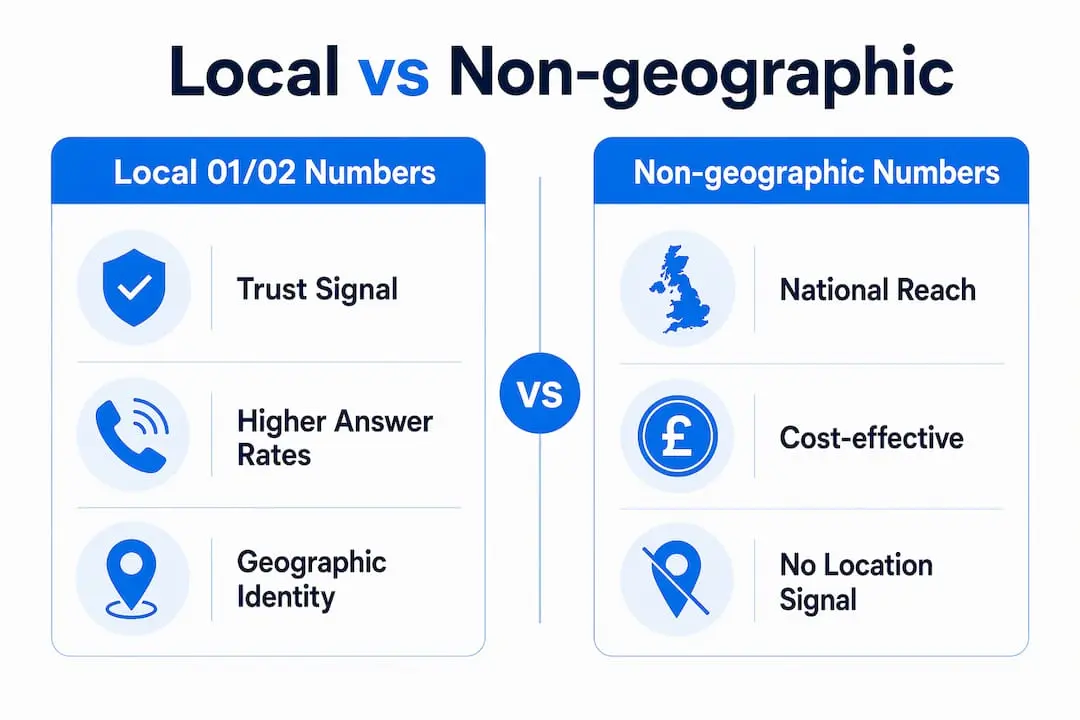
The core reason small businesses choose local numbers is trust. A local code functions as a trust shortcut for customers, implying the business is nearby, accountable, and part of the same community. That perception happens in under a second, before anyone picks up the phone.
The data supports this. Stride Communications reports 28% higher answer rates for local numbers compared with withheld or 0800 numbers. That is not a marginal difference. For a small business making 50 outbound calls a week, a 28% uplift in answer rates translates directly into more conversations, more quotes, and more sales.
Local codes also support regional SEO. Google My Business listings and local search rankings respond positively to consistent local signals, and your phone number is one of them. A business in Sheffield displaying a 0114 number reinforces its geographic relevance to search engines and customers alike. Pairing a local number with a verified Google Business Profile creates a coherent local identity that generic or national numbers cannot replicate.
There is also the question of perception beyond trust:
- Permanence. A local landline prefix suggests an established business, not a sole trader working from a mobile.
- Professionalism. Customers associate 01/02 numbers with offices, reception staff, and structured operations.
- Community alignment. Particularly in sectors like trades, legal services, and healthcare, customers actively prefer local providers.
- Reduced call reluctance. People are less likely to ignore or block a recognisable local code than an unknown mobile or non-geographic number.
Virtual local numbers make this accessible to any business, regardless of physical location. Geographic Call Portability means a business based in Leeds can legitimately hold and display a 020 London number if it serves London clients, routing calls to any device or team member. This flexibility is one of the most underused advantages in UK small business telecoms.
Pro Tip: If you serve customers in multiple cities, consider acquiring a local number for each key region. Route them all to the same team, but track which number generates the most enquiries to understand where your strongest local demand sits.
How do local area codes compare with non-geographic or national numbers?
The choice between local and non-geographic numbers is not a matter of one being better. It is a matter of which serves your specific business goals. Local numbers strengthen community trust, while non-geographic numbers like 0333 or 0800 support a national brand image. Both have legitimate uses, and many businesses use both simultaneously.
| Feature | Local 01/02 numbers | Non-geographic (0333, 0800) |
|---|---|---|
| Customer trust signal | Strong regional credibility | Neutral or national brand feel |
| Call answer rates | Higher for local audiences | Lower for cold outreach |
| Cost to caller | Standard rate (same as 01/02) | 0333 standard rate; 0800 free |
| Geographic association | Tied to a specific region | No regional association |
| Best use case | Regional businesses, trades, professional services | National retailers, helplines, large enterprises |
| SEO benefit | Supports local search signals | Minimal local SEO benefit |
| Flexibility | Portable via VoIP | Fully portable |
For a plumber in Bristol, a 0117 number is almost always the right choice. For a national e-commerce brand handling returns calls, a 0333 number makes more sense. The mistake many small businesses make is defaulting to a mobile number or a generic national number when their customers are overwhelmingly local. You can read more about this trade-off in the local vs national numbers guide from Phonenumbers.
VoIP delivery has changed the technical side of this equation significantly. Many firms now keep local numbers purely for branding and customer perception, even though the underlying call delivery is entirely cloud-based. The number format is the customer-facing signal. The infrastructure behind it is invisible to the caller.
Practical tips for using local area codes effectively
Getting a local number is straightforward. Using it well requires a bit more thought. Here is how to get the most from local area codes in your business:
-
Assign one number per location or campaign. If you operate in Manchester and Leeds, use 0161 and 0113 separately. This lets you track enquiry sources by region and measure which areas generate the most inbound interest.
-
Use cloud-based telephony to manage routing. Modern VoIP platforms let you assign independent greetings, call flows, and routing rules to each local number. A caller to your Leeds number can hear a Leeds-specific greeting and reach the right team member, even if everyone works remotely.
-
Keep your number consistent across all touchpoints. Your website, Google Business Profile, social media, and printed materials should all display the same local number. Inconsistency confuses customers and weakens local SEO signals.
-
Avoid using personal mobile numbers as your primary contact. A mobile number signals a sole trader or informal operation. A local 01/02 number signals an established business, even if you are a one-person operation working from home.
-
Review call data regularly. Separate local numbers per campaign give you precise attribution data. If your 0121 Birmingham number generates three times more calls than your 0113 Leeds number, that tells you something concrete about where to focus your marketing spend.
Pro Tip: When selecting a local number, choose one that is easy to remember. A number with a repeating sequence or pattern, such as 0113 255 0000, is far more likely to stick in a customer’s mind than a random string of digits. Phonenumbers specialises in exactly this kind of memorable local number.
The one pitfall to avoid is misrepresentation. Displaying a London 020 number when you have no genuine connection to London and no ability to serve London customers creates a mismatch that erodes trust the moment a customer realises it. Use local numbers for regions you genuinely serve, even if you serve them remotely.
Key takeaways
Local area codes remain one of the most cost-effective trust signals available to UK small businesses, and the combination of geographic credibility, higher answer rates, and local SEO benefit makes them worth prioritising over generic alternatives.
| Point | Details |
|---|---|
| Trust and answer rates | Local 01/02 numbers generate 28% higher answer rates than withheld or 0800 numbers. |
| Geographic credibility | A recognisable area code signals permanence, professionalism, and community alignment. |
| Virtual numbers remove barriers | Geographic Call Portability lets any business hold a local number without a physical office in that area. |
| Local vs non-geographic | Choose local codes for regional trust; use 0333 or 0800 for national brand consistency. |
| Operational tracking | Assigning separate numbers per location or campaign enables precise lead attribution and call routing. |
The underrated power of a local number
I have spoken with hundreds of small business owners over the years who treat their phone number as an afterthought. They set up a mobile, maybe a generic 0333, and move on. What surprises them, every time, is how much difference a local number makes once they switch.
The trust signal is real. It is not marketing theory. When a customer in Manchester sees 0161 on their screen, something clicks. The business feels local, accountable, and present. That feeling happens before anyone speaks a word. In sectors like trades, legal services, and local retail, that first impression is often the deciding factor between a call answered and a call ignored.
What I find most interesting is that this advantage has not diminished with the rise of VoIP and remote working. If anything, it has grown. As more businesses operate nationally from virtual offices, the ones that maintain a genuine local identity stand out more clearly. The advantages of local numbers are not about nostalgia for old telecoms. They are about understanding how customers still make decisions.
My advice to any small business owner is this: do not overthink the technology. Get a memorable local number for the region you serve, keep it consistent across every touchpoint, and let it do its work quietly in the background. The return on that small investment is disproportionate to its cost.
— Rob
Get a memorable local number for your business
If you are ready to put a local number to work for your business, Phonenumbers makes it straightforward. As the UK’s leading provider of memorable 01 and 02 landline numbers, Phonenumbers lets you search by area code, town, city, or number sequence to find a number that fits your brand and region.
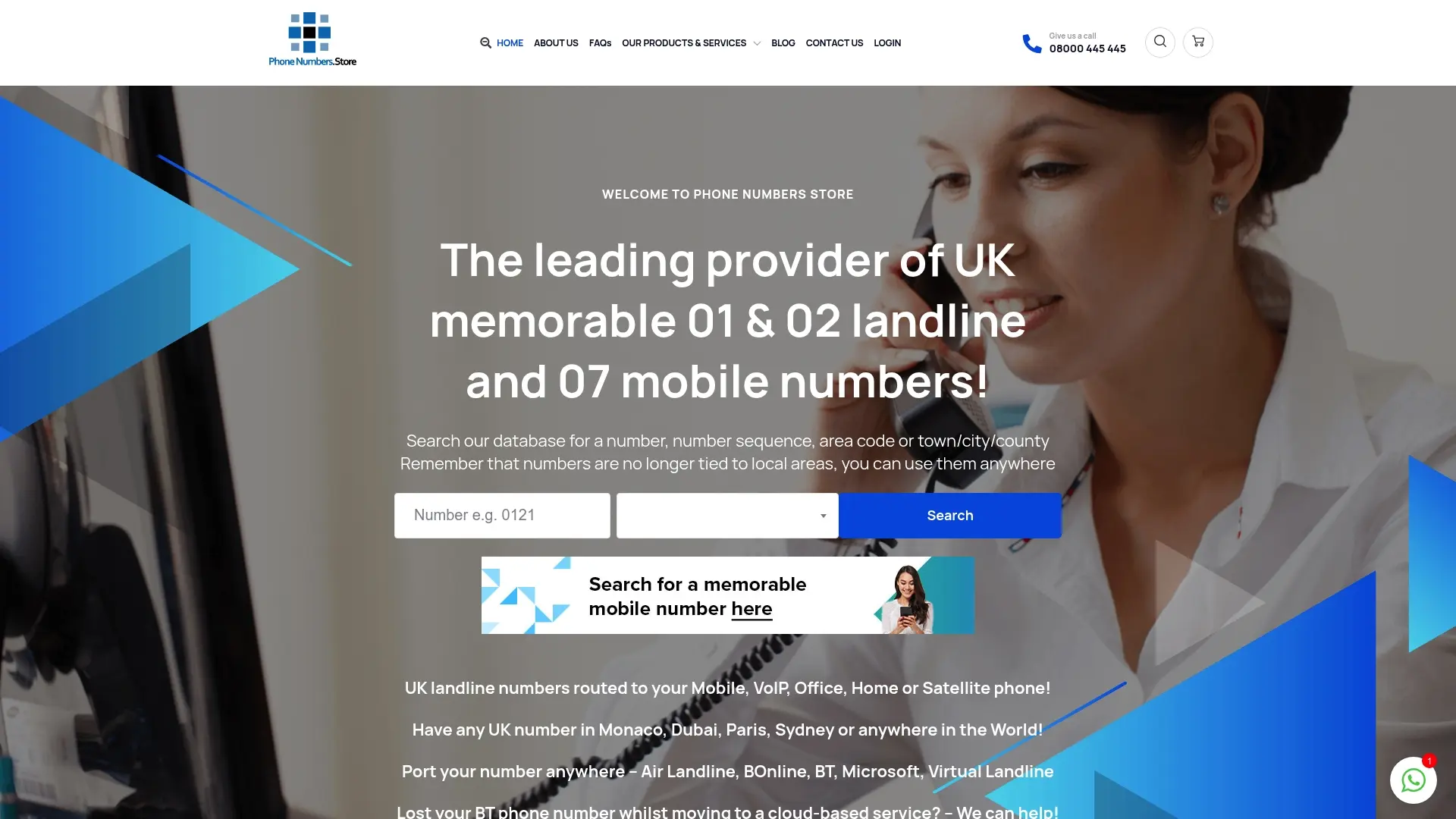
Numbers are no longer tied to physical locations, so you can use any area code anywhere in the UK. Whether you want a memorable Leeds number for a professional local presence or a recognisable Nottingham number to serve your East Midlands customers, Phonenumbers has options ready to go. Browse the full catalogue at Phonenumbers and secure the number that makes your business unforgettable.
FAQ
What is a local area code in the UK?
A local area code is a geographic telephone prefix in the 01 or 02 range, allocated by Ofcom and associated with a specific town, city, or region. Examples include 020 for London, 0161 for Manchester, and 0121 for Birmingham.
Why do businesses use local area codes instead of mobile numbers?
Local 01/02 numbers signal permanence and professionalism, whereas mobile numbers suggest an informal or sole-trader operation. Research indicates local numbers achieve higher answer rates than mobile or non-geographic alternatives.
Can I use a local area code if my business is not physically in that area?
Yes. Geographic Call Portability allows any business to hold and display a local area code and route calls to any location or device, regardless of where the business is physically based.
How do local area codes help with local SEO?
Displaying a consistent local number across your website, Google Business Profile, and directory listings reinforces your geographic relevance to search engines, supporting higher rankings in local search results.
What is the difference between a local number and a 0333 number?
A local 01/02 number carries a regional identity and builds community trust, while a 0333 non-geographic number projects a national brand image with no geographic association. The right choice depends on whether your business priorities are regional credibility or national consistency.