
TL;DR:
- Many UK businesses assume that displaying a local phone number automatically gains customer trust, but true branding depends on genuine local presence. City-specific numbers in the 01 and 02 ranges signal location and credibility, helping businesses expand into new markets or enhance local reputation without physical offices. Effective use of these numbers requires strategic alignment with local content, compliance with Ofcom regulations, and consistent branding across all customer touchpoints.
Plenty of UK businesses assume that slapping any vaguely local-looking phone number on their website will automatically earn them customer trust. The reality is more nuanced than that. City-specific numbers, those carrying genuine geographic area codes like 020 or 0161, carry real branding weight precisely because they signal something meaningful to callers. But there are also compliance rules, provider choices, and strategic decisions that separate businesses that truly benefit from those that simply go through the motions.
Table of Contents
- Understanding city-specific numbers in the UK
- Why choose a city-specific number for your business?
- Geographic vs non-geographic numbers: rules and risks
- How to get and use a city-specific number
- Our perspective: the real secret to standing out with city-specific numbers
- Elevate your brand with city-specific numbers from PhoneNumbers.store
- Frequently asked questions
Key Takeaways
| Point | Details |
|---|---|
| Local numbers signal trust | Using a city-specific number immediately tells customers you serve their area and builds credibility. |
| Compliance matters | Always check Ofcom’s rules before using a geographic number outside its allocated region. |
| Choose the right option | Understand the pros and cons of geographic versus non-geographic numbers before deciding. |
| VoIP enables flexibility | Virtual systems let you use city codes from anywhere, but confirm usage permissions first. |
| Integration drives results | A city-specific number boosts your brand most when woven into wider local marketing efforts. |
Understanding city-specific numbers in the UK
Having set the stage for why local numbers matter, let us define exactly what makes a number city-specific in UK telecoms.
A city-specific number is a phone number that begins with a geographic area code, specifically those in the 01 or 02 range. These area codes were originally assigned by Ofcom to particular towns, cities, and regions across the United Kingdom. When a caller sees one of these numbers, their brain immediately registers a location. That instant recognition is the foundation of the entire branding opportunity.
The “area code” is the initial set of digits used before the main phone number to route calls to a specific city or region. In practical terms, this means the digits before your subscriber number communicate geography before anyone even picks up.
Here is a quick reference for some of the most widely recognised UK city codes:
| City | Area code | Example number format |
|---|---|---|
| London | 020 | 020 XXXX XXXX |
| Manchester | 0161 | 0161 XXX XXXX |
| Leeds | 0113 | 0113 XXX XXXX |
| Birmingham | 0121 | 0121 XXX XXXX |
| Bristol | 0117 | 0117 XXX XXXX |
| Sheffield | 0114 | 0114 XXX XXXX |
| Nottingham | 0115 | 0115 XXX XXXX |
| Liverpool | 0151 | 0151 XXX XXXX |
| Edinburgh | 0131 | 0131 XXX XXXX |
Businesses value city-specific numbers for several distinct reasons. Learning how to pick a local phone number for your business is an important starting point. The core advantages include:
- Instant geographic credibility with prospects in your target city
- Higher answer rates from customers who recognise and trust local prefixes
- Brand positioning in a specific market without requiring a physical office
- Consistency across marketing materials, directories, and websites
- Differentiation from faceless 0800 or 03 lines in customer-facing comms
“An area code signals origin. For callers across the UK, a familiar geographic prefix creates an immediate, subconscious association with place, presence, and accountability.”
Understanding the full range of local and national phone number options available in the UK will help you make a well-informed choice from the outset.
Why choose a city-specific number for your business?
Now that you understand what city-specific numbers are, let us explore why they are powerful tools for business branding and outreach.
The 01 and 02 prefixes carry something that no amount of clever marketing copy can manufacture instantly: familiarity. When a Leeds resident sees a number starting with 0113, they process it as local almost reflexively. That recognition triggers a sense of proximity and accountability that drives both initial calls and repeat contact.
Geographic 01/02 numbers signal place in a way that non-geographic alternatives simply cannot replicate. Businesses seeking a memorable city-specific caller ID consistently find that the prefix alone does a significant portion of the trust-building work before the call is even answered.
Here are the top business scenarios where city-specific numbers deliver the strongest return:
- Entering a new market. If your business is expanding into a new city, an 01 or 02 number for that area signals that you are present and accessible locally, without requiring you to open a physical premises.
- Franchise and multi-location branding. Each branch can carry its own city code, giving every location a distinct local identity under a broader brand umbrella.
- Home-based and remote businesses. Sole traders and small teams working remotely can present a professional, city-specific number rather than a personal mobile.
- Converting mobile users to a landline appearance. Replacing a personal 07 number with an 01 or 02 gives your business a more established, permanent feel.
- Targeting specific demographic regions. Marketing campaigns can be geo-targeted, with separate city codes tracking response rates by region.
Exploring the difference between city-based vs mobile numbers reveals just how much the perception of professionalism shifts when you move from a mobile to a geographic landline number. Research consistently shows that customers are more likely to trust and call back a business presenting a landline number than one showing a mobile.
Pro Tip: When selecting a city code, prioritise the area where your ideal customers are based, not necessarily where your business is registered. Numbers are no longer physically tied to a location, so you can present a Manchester or London number while operating from anywhere in the UK.
Understanding the full advantages of local numbers for UK businesses goes well beyond simple aesthetics. The right number can genuinely move the needle on enquiry rates, conversion, and brand recall.
Geographic vs non-geographic numbers: rules and risks
While city-specific numbers have clear advantages, it is crucial to compare them with non-geographic options and understand the compliance landscape.
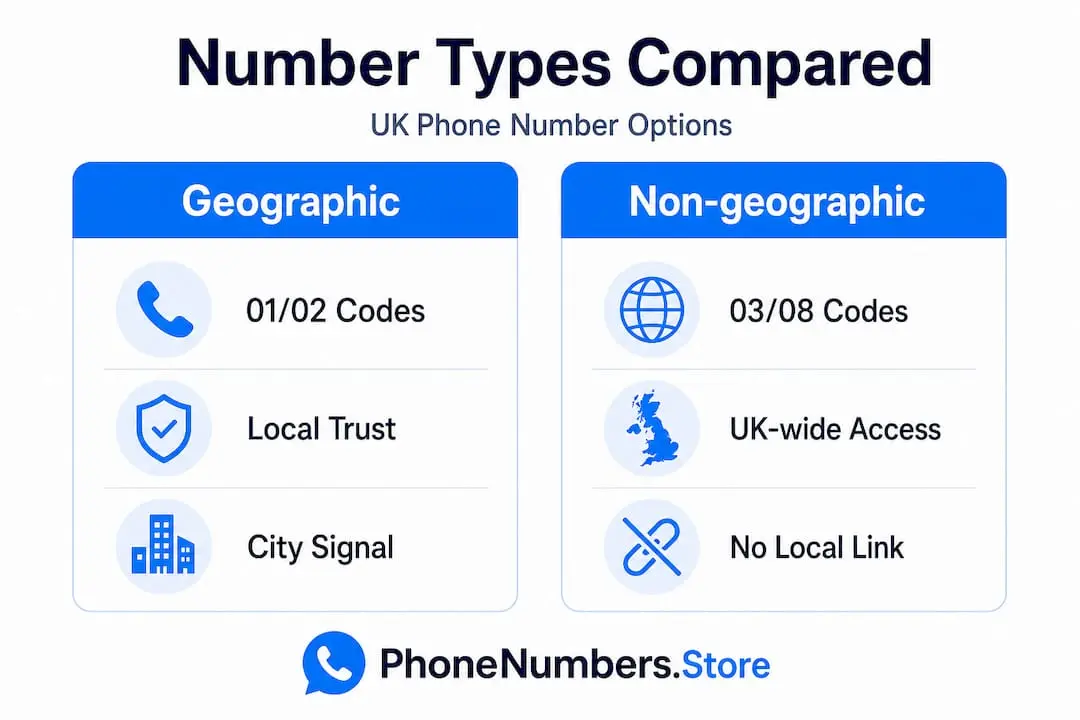
Geographic numbers are those in the 01 and 02 ranges, assigned to specific towns and cities by Ofcom as part of the National Telephone Numbering Plan. Non-geographic numbers, such as 03 lines for charities and businesses, or 08 lines for various service types, are not tied to any physical location and work on a different allocation basis entirely.
| Feature | Geographic (01/02) | Non-geographic (03/08) |
|---|---|---|
| Location signal | Strong | None |
| Customer trust (local) | High | Lower for local campaigns |
| UK-wide usability | Flexible with correct setup | Yes, inherently |
| Compliance complexity | Moderate (area allocation rules) | Lower |
| Branding power | Strong for city targeting | Better for national brands |
| Memorable potential | Very high (recognisable city codes) | Moderate |
| Call charges for callers | Standard geographic rate | Varies by prefix |
VoIP and virtual number systems allow businesses to present an 01 or 02 caller ID while routing calls to any phone or device. This is a hugely practical solution for remote teams, multi-city businesses, and those without a traditional landline infrastructure. However, there are important considerations when it comes to compliance.
UK numbering regulation treats geographic allocation as location-specific, which means using a geographic number outside its allocated area may constitute a breach without Ofcom consent or a relevant exception. This is something many businesses overlook when they simply purchase a number without checking its compliance status.
Key compliance pitfalls to watch for include:
- Misrepresenting location. Using a London 020 number whilst actively claiming to be a local London business when you are not could raise regulatory concerns.
- Failing to check the National Telephone Numbering Plan. Ofcom publishes detailed guidance on which codes are allocated to which areas.
- Provider compliance. Not all number providers conduct proper allocation checks. Always verify that your supplier follows Ofcom guidelines.
- Call routing transparency. When using VoIP to route calls, confirm that your setup meets the conditions of your number’s allocation.
Pro Tip: Before deploying any geographic number in a marketing campaign, cross-reference it against Ofcom’s National Telephone Numbering Plan. A few minutes of checking can save significant regulatory headaches later.
For a detailed breakdown of how these options compare in practice, the local vs national numbers comparison guide is worth reading alongside the specifics on using non-geographic numbers for UK businesses. The local vs non-local numbers breakdown also provides useful context for making the right call for your specific situation.
How to get and use a city-specific number
You know why and what to choose. Here is how your business can smoothly secure and leverage a city-specific number.
Acquiring a city-specific number is a straightforward process when you work with a reputable provider, but there are several steps to follow to ensure you get a number that is both memorable and compliant.
- Define your target city or region. Decide which area code best serves your primary audience. If you are targeting multiple cities, you can acquire a separate number for each location.
- Search a specialist number database. Use a platform that allows you to search by area code, number sequence, or town and city. This makes it easy to find something genuinely memorable rather than settling for a random allocation.
- Check compliance against the National Telephone Numbering Plan. Confirm that your chosen number is properly allocated and that your intended use meets Ofcom’s guidelines.
- Choose your setup: virtual or physical landline. A virtual or VoIP setup routes calls to any device, making it ideal for remote businesses. A traditional landline setup suits those with a fixed office location.
- Activate and configure call routing. Set up call forwarding, voicemail, and any automated answer systems to ensure the number integrates smoothly with your existing operations.
- Update all marketing materials. Place your new city-specific number prominently on your website, business cards, social media profiles, and any paid advertising. Consistency is key.
VoIP and virtual-number setups can route calls while still presenting an 01/02 caller ID, but you must confirm allocation and usage permissions under the National Telephone Numbering Plan before going live. Skipping this step is the single most common mistake businesses make when deploying a virtual geographic number.
Practical scenarios where this setup shines include multi-city businesses that want each location to feel locally rooted, remote teams who need a professional front-of-house number, and growing brands that want to test a new city market without committing to office space.

Pro Tip: If you plan to use your city-specific number in paid search or social media ads, make sure the number is visible and consistent across every touchpoint in that campaign. Inconsistency between your ad number and your website number can destroy the trust you worked hard to build.
For a full walkthrough, the local number acquisition guide covers each stage in detail. The business phone number basics resource is also useful for those new to the process.
Our perspective: the real secret to standing out with city-specific numbers
Here is something most guides on this topic quietly sidestep. Simply acquiring a city-specific number and printing it on your website does not make your business local. It makes your phone number look local. That is not the same thing.
We have seen businesses invest in a premium 020 London number and then fail entirely to engage with the London market in any meaningful way. The number sits on a generic website with no reference to London, no London-specific content, no local knowledge, and no visible reason for a Londoner to feel that this business actually understands their context. The number becomes wallpaper.
The businesses that genuinely benefit from city-specific numbers are those that treat the number as part of a broader local presence strategy. That means creating landing pages specific to the city you are targeting, featuring local knowledge, local case studies, and local pricing context where relevant. It means ensuring your staff can speak knowledgeably about that area. It means your Google Business profile, your local directory listings, and your social media activity all reinforce the same geographic story your phone number is telling.
A city-specific number is a signal. But signals only work when they are consistent with everything around them. If the rest of your customer experience contradicts what your 01 or 02 number implies, you are not building trust. You are eroding it.
Our strong advice is to treat your city-specific number as the anchor of a local market strategy, not a shortcut to one. Build outward from it. A guide on UK-wide phone access demonstrates how businesses are thinking about this at scale, using multiple city codes to build genuine multi-market presence. That is the model worth emulating.
The number itself is easy to get. The local presence it represents takes intention and consistency to build.
Elevate your brand with city-specific numbers from PhoneNumbers.store
Ready to put this advice into practice? At PhoneNumbers.store, we specialise in memorable UK phone numbers across every major city, covering 01 and 02 geographic area codes and 07 mobile numbers. Our database lets you search by area code, number sequence, or town and city so you can find a number that works hard for your brand from day one.
Every number in our catalogue is fully Ofcom-compliant, and because numbers are no longer tied to physical locations, you can buy a city-specific number and use it from anywhere in the UK. Want something genuinely striking? Browse options like the Leeds 0113 255 0000 number or the Nottingham 0115 928 8888 number, both highly memorable and instantly recognisable to local audiences. Your perfect city code is waiting.
Frequently asked questions
What is a city-specific number in the UK?
It is a phone number carrying a geographic area code such as 020 for London, which signals to callers that the business operates in a particular city. The “area code” routes calls to a specific city or region before the subscriber number is dialled.
Can my business use a city-specific number outside its area?
Geographic number allocation is location-specific under UK numbering regulation, so using a number outside its allocated area may require Ofcom consent depending on your setup and intended use.
What is the difference between geographic and non-geographic numbers?
Geographic numbers use 01 or 02 area codes to signal a city or region, while non-geographic numbers such as 03 or 08 carry no location information. UK numbering regulation treats geographic allocation as category-specific, giving geographic numbers a distinct compliance and branding status.
How can I ensure my city-specific number is Ofcom compliant?
VoIP setups presenting an 01/02 caller ID must be verified against the National Telephone Numbering Plan. Always confirm allocation and usage permissions with your provider before deploying the number in any campaign.