
Many UK small businesses hesitate to use premium rate numbers due to confusion about costs, regulations, and customer perception. Yet these numbers can generate revenue, enhance professional image, and manage call flows when deployed correctly. Understanding how premium rate numbers work, their regulatory requirements, and when they suit your business model helps you make informed decisions about customer engagement strategies without deterring callers or facing compliance issues.
Table of Contents
- Key takeaways
- Understanding premium rate numbers: what they are and how they work
- Regulation and compliance: what UK small businesses must know
- Benefits and drawbacks of premium rate numbers for small UK businesses
- Practical guide: how UK small businesses can get and use premium rate numbers wisely
- Explore premium and memorable UK phone numbers for your business
- What is a premium rate number? frequently asked questions
Key Takeaways
| Point | Details |
|---|---|
| What premium rate numbers are | Premium rate numbers charge callers higher rates than standard geographic calls and enable monetisation by sharing revenue with the network operator. |
| Regulation and transparency | Ofcom and the PSA regulate premium rate services; providers must register, disclose costs clearly, and obtain caller consent. |
| Common uses for UK firms | Taxi firms and plumbers can use premium rate lines to generate revenue or manage call flows, including paid information and emergency advice services. |
| Costs and perception issues | High charges and customer perception concerns can deter usage if pricing is not clearly disclosed. |
| When to consider alternatives | Consider premium rate numbers only when the revenue or service value justifies the cost, and compare with non premium options before deployment. |
Understanding premium rate numbers: what they are and how they work
A premium rate number in the UK charges callers higher rates than standard geographic calls, used for phone-paid services where customers pay for content, goods, or services added to their phone bill. These numbers enable businesses to monetise calls by setting a service charge that callers pay, with revenue split between the business and the network operator.
The charge structure divides into two components: the service charge paid to your business and the access charge paid to the caller’s phone network. This arrangement lets you generate income from each call while providing premium content, support, or information services. Callers see the total cost on their phone bill rather than paying directly, making transactions seamless but potentially surprising if costs aren’t clearly disclosed.
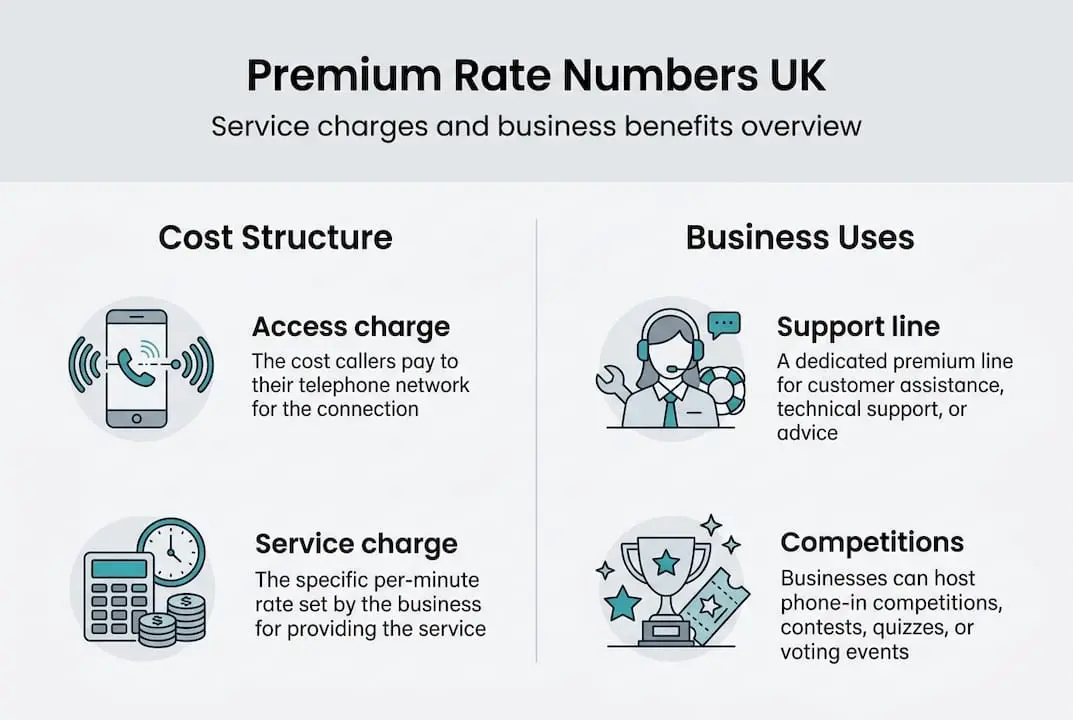
Premium rate numbers typically start with specific prefixes: 09 numbers can charge up to £3.60 per minute, 087 numbers up to 13 pence per minute, and 118 directory services up to £3.65 for 90 seconds. Mobile shortcodes of five or six digits also fall into this category, commonly used for voting, competitions, and donations.
Common business applications include paid information lines, technical support services, adult content, voting and competitions, subscription services, and charity donations. Taxi firms might use them for premium booking services with guaranteed response times, while plumbers could offer paid emergency advice lines outside normal hours. The key advantage lies in the revenue-generating capability that standard geographic numbers cannot provide.
When considering premium rate numbers, understanding securing UK business numbers helps you evaluate all options. The mobile number selection process also matters if you’re comparing different number types for your business communications strategy.
Typical premium rate prefixes and maximum charges:
- 09 numbers: up to £3.60 per minute for high-value services
- 087 numbers: up to 13 pence per minute for business support lines
- 084 numbers: up to 13 pence per minute for customer service applications
- 118 directory services: up to £3.65 for 90 seconds of assistance
- Five to six digit shortcodes: variable pricing for voting, donations, competitions
The Ofcom premium rate guide provides comprehensive details on permitted uses and pricing structures. BT premium rate codes documentation offers additional technical specifications for businesses planning to deploy these numbers.
Regulation and compliance: what UK small businesses must know
Ofcom and the Phone-paid Services Authority regulate premium rate services, requiring providers to register, clearly disclose costs, and obtain caller consent. These regulatory bodies protect consumers from unexpected charges and ensure businesses operate transparently when monetising phone calls.
Before launching any premium rate service, you must register with both Ofcom and the PSA. This registration process verifies your business credentials, service description, and pricing structure. Operating without proper registration risks substantial fines and immediate service suspension, making compliance non-negotiable for legitimate businesses.
Cost disclosure requirements mandate that you clearly state the full call charge before callers incur any costs. This means displaying pricing prominently in all marketing materials, on your website, and through recorded announcements at the start of calls. Ambiguous or hidden pricing violates regulations and damages customer trust, potentially leading to complaints and enforcement action.
Explicit caller consent becomes essential when charges apply, particularly for subscription services or recurring payments. You cannot rely on passive acceptance; callers must actively agree to charges through clear opt-in mechanisms. This protects consumers from accidental charges and ensures they understand exactly what they’re paying for before proceeding.
The PSA monitors consumer complaints and investigates reported violations. Businesses must maintain complaint handling procedures and respond promptly to customer concerns. High complaint volumes trigger investigations that can result in fines, service restrictions, or complete service termination depending on violation severity.
Pro tip: Maintain detailed call records and cost disclosure evidence for at least two years. This documentation protects you during regulatory audits and helps resolve customer disputes quickly, demonstrating your commitment to transparent operations and consumer protection.
Personal numbering services for taxis offer alternatives that avoid premium rate complications while still providing professional communication solutions. Setting up a business phone line through standard geographic or memorable numbers often proves simpler and more customer-friendly for core business operations.
The Ofcom PSA regulations page details current compliance requirements and provides practical guidance for businesses considering premium rate services.
Benefits and drawbacks of premium rate numbers for small UK businesses
Premium rate numbers generate revenue share from calls, enhance professional image, and improve call management for businesses like taxi firms and plumbers offering paid advice or support services. The service charge component provides direct income from each call, turning your phone line into a revenue stream rather than purely an expense.

Professional image benefits emerge because premium rate numbers signal specialist services worth paying for. Customers perceive businesses using these numbers as established providers offering expert advice or premium support. This perception works particularly well for technical support lines, emergency services, or specialist consultations where callers expect to pay for expertise.
Call flow management improves because premium charges naturally filter casual enquiries, ensuring callers have genuine need for your paid services. This reduces time wasted on non-serious calls and helps you focus resources on customers willing to pay for your expertise. For busy tradespeople, this filtering effect alone justifies the premium rate structure.
However, consumer distrust of premium numbers creates significant drawbacks, with high mobile costs and regulatory burdens adding complexity. Many customers associate premium rate numbers with scams or excessive charges, making them hesitant to call even for legitimate services. This perception problem particularly affects small businesses trying to build local trust and reputation.
Mobile call costs to premium rate numbers often exceed landline rates substantially, creating sticker shock for customers calling from smartphones. Since most people now use mobiles as their primary phones, this cost differential deters calls and reduces customer engagement. The pricing complexity also confuses customers who struggle to understand exactly what they’ll pay.
Compliance requirements add administrative burden that small businesses may find overwhelming. Maintaining registration, updating cost disclosures, handling complaints, and keeping detailed records demands time and attention that diverts from core business activities. For sole traders or small teams, this regulatory overhead can outweigh the revenue benefits.
| Advantages | Disadvantages |
|---|---|
| Generate revenue from each call | Customer distrust and perception issues |
| Professional image for specialist services | Higher costs from mobile phones |
| Natural call filtering reduces time wasters | Complex regulatory compliance burden |
| Direct income stream from phone line | Pricing confusion deters potential customers |
| Better resource allocation to paying customers | Administrative overhead for small teams |
Considerations for small businesses:
- Use premium rate numbers only for optional premium services, never core customer contact lines
- Clearly communicate value proposition to justify premium charges
- Provide alternative contact methods for price-sensitive customers
- Monitor complaint rates and customer feedback continuously
- Calculate whether revenue share justifies customer deterrence and compliance costs
- Consider memorable or freephone alternatives for better engagement
The benefits of UK wide numbers often outweigh premium rate advantages for businesses prioritising customer accessibility. A memorable phone numbers comparison helps evaluate which number type best suits your business model and customer expectations.
Review small business 0871 number insights for real-world experiences from UK businesses using premium rate services.
Practical guide: how UK small businesses can get and use premium rate numbers wisely
Businesses obtain premium rate numbers through telecom providers, set service charges, and register with PSA and Ofcom to generate revenue from calls legally and transparently. Follow these steps to deploy premium rate services effectively while maintaining customer trust and regulatory compliance.
-
Research telecom providers offering premium rate number services and compare their revenue share structures, technical support, and compliance assistance. Choose providers with established PSA relationships and proven track records supporting small businesses.
-
Select appropriate number prefix based on your service type and desired pricing level. Higher charge numbers suit specialist advice services, while lower rate numbers work better for extended support calls where total cost matters more than per-minute rates.
-
Register your service with both Ofcom and the Phone-paid Services Authority before launching. Complete all required documentation including service description, pricing structure, target audience, and marketing approach. Allow several weeks for approval processes.
-
Implement clear cost disclosure across all customer touchpoints. Display full charges prominently on your website, marketing materials, and at call start through recorded announcements. Use simple language avoiding technical jargon that might confuse callers.
-
Establish robust consent mechanisms for any subscription or recurring charge services. Implement double opt-in processes where callers confirm their understanding of charges before proceeding. Document all consent interactions for regulatory compliance.
-
Set up complaint handling procedures and monitoring systems. Designate responsibility for responding to customer concerns within 48 hours. Track complaint patterns to identify and resolve recurring issues quickly.
Pro tip: Never use premium rate numbers for core customer service or initial sales enquiries. Reserve them exclusively for optional premium services where callers understand and accept charges as payment for specialist expertise or guaranteed response times.
For UK small businesses like taxis and plumbers, premium rate numbers work best for paid advice lines but risk poor perception; memorable or freephone numbers often boost engagement more effectively without deterring calls. Consider your customer base and whether they’ll perceive premium charges as fair value or unnecessary barriers.
Test premium rate services on a small scale before full deployment. Monitor call volumes, revenue generation, complaint rates, and customer feedback for at least three months. This trial period reveals whether benefits justify costs and customer perception impacts.
Maintain detailed records of all calls, charges, disclosures, and customer interactions. Store these records securely for at least two years to satisfy regulatory requirements and support any dispute resolution. Good record keeping protects your business during audits and demonstrates compliance commitment.
The process of registering a new landline UK shares similarities with premium rate registration but with fewer compliance complexities. Understanding securing business numbers UK helps you evaluate whether premium rate numbers genuinely suit your business needs or whether standard memorable numbers serve you better.
Consult the Phonexa guide to pay-per-call numbers for additional technical details and business case studies.
Explore premium and memorable UK phone numbers for your business
Whether you need premium rate capabilities or prefer memorable numbers that encourage customer calls without cost barriers, selecting the right phone number elevates your business presence and improves customer engagement. Many UK small businesses find that memorable landline or mobile numbers deliver better results than premium rate alternatives, building trust while remaining accessible.
PhoneNumbers.store specialises in helping businesses buy phone numbers that customers remember and trust. Our database includes 01 and 02 landline numbers plus 07 mobile numbers across all UK regions, with flexible options to buy or rent based on your business needs. Numbers no longer tie to local areas, so you can use any number anywhere in the UK while maintaining professional credibility.
Search our extensive database by number sequence, area code, or location to find memorable combinations that reflect your brand identity. Whether you want repeated digits, sequential patterns, or numbers spelling words, we help you secure distinctive numbers that customers recall easily and dial confidently.
The benefits of UK wide numbers often exceed premium rate advantages for businesses prioritising customer accessibility and trust. Explore your options through our main page to discover how the right number transforms your business communications strategy.
What is a premium rate number? frequently asked questions
How do premium rate numbers compare to freephone numbers for costs?
Premium rate numbers charge callers while generating revenue for your business, whereas freephone numbers cost your business per call but remain free for customers. Freephone numbers typically increase call volumes and customer satisfaction, making them preferable for sales and support lines where you want to encourage contact.
Do premium rate numbers damage customer trust?
Many customers associate premium rate numbers with scams or excessive charges, creating initial distrust that can deter calls. You can mitigate this by clearly explaining the value provided, displaying costs prominently, and using premium numbers only for specialist paid services rather than general enquiries.
What registration is required for UK businesses using premium rate numbers?
You must register with both Ofcom and the Phone-paid Services Authority before launching any premium rate service. Registration involves submitting detailed service descriptions, pricing structures, and compliance procedures, typically taking several weeks for approval.
What alternatives exist to premium rate numbers for customer engagement?
Memorable landline numbers, freephone numbers, and distinctive mobile numbers often deliver better customer engagement without cost barriers. These alternatives build trust and encourage calls while avoiding the negative perceptions associated with premium rate services.
How exactly do callers pay for premium rate calls?
Charges appear automatically on the caller’s phone bill from their network provider, combining the service charge you set with the network’s access charge. Callers see itemised premium rate charges separately, making costs transparent but sometimes causing surprise if disclosure was inadequate.