
TL;DR:
- Fixed line numbers signal professionalism and local presence, enhancing customer trust.
- Virtual landlines make fixed line benefits accessible with flexibility and modern features.
- Using a fixed line number alongside a mobile improves business credibility and customer confidence.
Many UK small business owners assume that sticking with a mobile number is perfectly fine for professional use. After all, mobiles are convenient, always on, and everyone has one. But this assumption quietly costs businesses credibility every single day. Many owners confuse fixed line numbers with outdated technology, when in reality they remain one of the most powerful trust signals a service business can display. This article cuts through the confusion, explains exactly what a fixed line number is, and shows why getting one right could be one of the smartest moves you make for your business communication in 2026.
Table of Contents
- What is a fixed line number?
- Why fixed line numbers matter for UK businesses
- Fixed line numbers vs mobile numbers: Key differences
- Modern fixed line solutions: Virtual landlines and the digital shift
- Our perspective: The overlooked value of fixed line numbers in a mobile world
- Choose the right business phone number with PhoneNumbers.store
- Frequently asked questions
Key Takeaways
| Point | Details |
|---|---|
| Fixed line numbers defined | A fixed line number is a business phone number tied to a location, boosting professionalism. |
| Trust and credibility | UK customers trust businesses more when they can call a local fixed line or landline number. |
| Modern options available | Virtual landlines give all the benefits of a fixed line with added flexibility for any business. |
| Clear comparison | Choosing between fixed line and mobile depends on context, with fixed lines excelling for service credibility. |
What is a fixed line number?
A fixed line number is a telephone number that belongs to a specific geographic location rather than a person or device. In traditional terms, this meant a copper wire running into your premises. Today, the concept has expanded considerably, but the core principle remains: the number signals a place, not just a person.
Many people use the terms “landline,” “fixed line,” and “geographic number” interchangeably. They are closely related, but not identical. A landline meaning UK business owners need to grasp is that a fixed line number carries an area code, such as 0161 for Manchester or 0207 for central London, giving it an immediate local identity.
Here is where it gets interesting. A fixed line number is attached to a physical location rather than a mobile device, but modern virtual landlines replicate this entirely without needing physical infrastructure. This means a plumber based in Leeds can display a Leeds area code even if calls are routed to a mobile or a VoIP app.
Understanding the distinctions matters because the wrong choice affects how customers perceive your business:
- Fixed line number: Geographic area code, location-associated, high trust signal
- Virtual landline: Cloud-based, mimics fixed line benefits, fully portable
- Mobile number (07): Personal, flexible, lower perceived business credibility
- VoIP number: Internet-based, can carry any prefix, varies in quality and trust
- Non-geographic number (08x): No location implied, often used for national services
Pro Tip: Even if you work entirely from a mobile, displaying a geographic fixed line number on your website and marketing materials immediately lifts how professional your business appears to new customers.
The terminology confusion is not trivial. Business owners who dismiss fixed line numbers as “old fashioned” often make that judgement based on the physical infrastructure, not the number itself. The number is what customers see. And what customers see shapes what they believe about you.
Why fixed line numbers matter for UK businesses
With the definition clear, it is worth understanding why fixed line numbers carry such weight in the UK business landscape, particularly for service industries.
Customers in the UK have a deeply ingrained association between geographic phone numbers and legitimate, established businesses. A taxi firm displaying 0113 feels rooted in Leeds. A plumber showing 0121 feels like a local Birmingham trader. This is not just perception. Fixed line numbers increase perceived professionalism for local services, and that perception directly influences whether a potential customer picks up the phone or scrolls past.
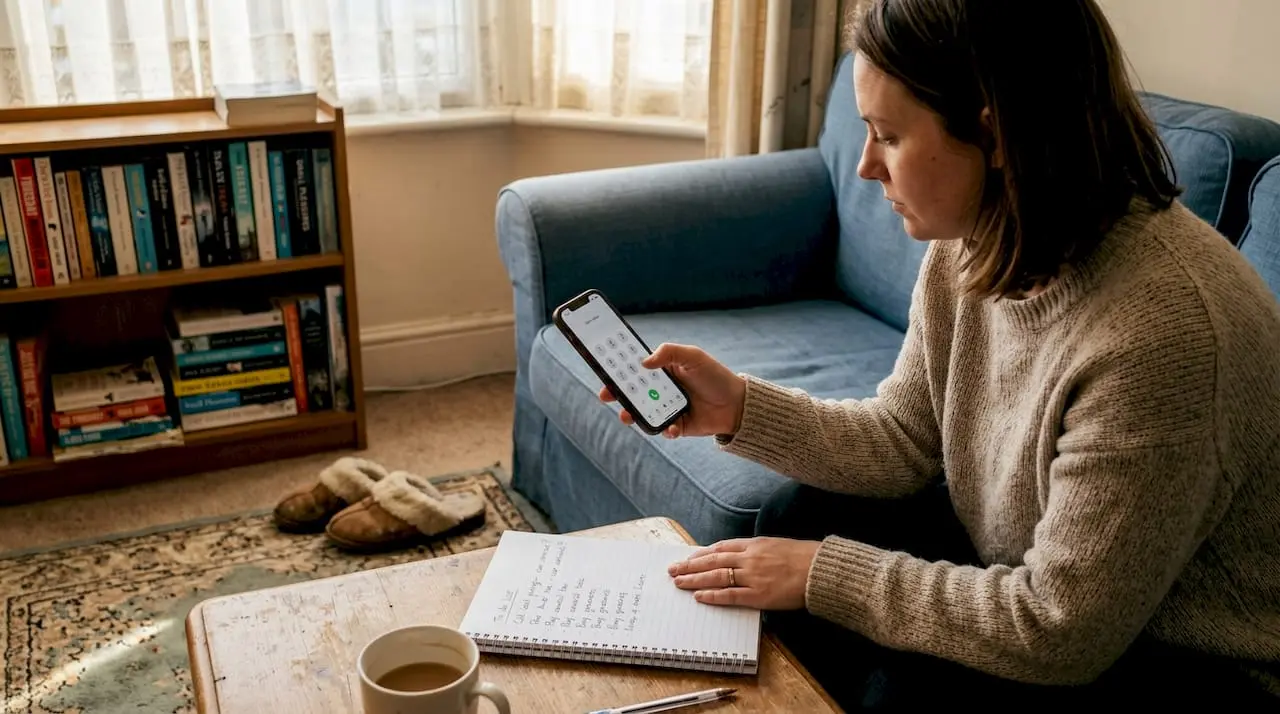
Consider the practical impact across common service industries:
| Industry | Fixed line benefit | Mobile-only risk |
|---|---|---|
| Taxi and private hire | Looks established, inspires confidence | Appears informal, customers may doubt legitimacy |
| Plumbing and heating | Local area code builds neighbourhood trust | Seen as a sole trader with no fixed base |
| Cleaning services | Professional image encourages repeat bookings | Customers hesitant to invite strangers into their home |
| Accountancy | Signals stability and long-term presence | May suggest a freelancer rather than a firm |
The numbers back this up. Businesses with a landline benefits for small businesses mindset consistently report higher call answer rates and lower customer drop-off at the first point of contact.
“Customers are far more likely to call a business displaying a local area code. It signals accountability and a genuine local presence.”
For service businesses, the stakes are particularly high. Your phone number is often the very first interaction a potential customer has with your brand. It appears on Google Business Profile, on leaflets, on vans, and on your website. A mobile number in that position whispers “small and informal.” A fixed line number says “we are here, we are established, and we are not going anywhere.”
You can explore examples of landline uses across trades and service businesses to see how this plays out in practice. The pattern is consistent: fixed line numbers drive more enquiries and build stronger first impressions.
Fixed line numbers vs mobile numbers: Key differences
To make a genuinely informed decision for your business, it helps to see these two options side by side.
| Feature | Fixed line number | Mobile number |
|---|---|---|
| Location association | Strong, area-specific | None |
| Perceived trust | High | Moderate to low |
| Call quality | Generally excellent | Variable |
| Business image | Established, professional | Personal, informal |
| Portability | Limited (unless virtual) | Fully portable |
| Cost to obtain | Low to moderate | Low |
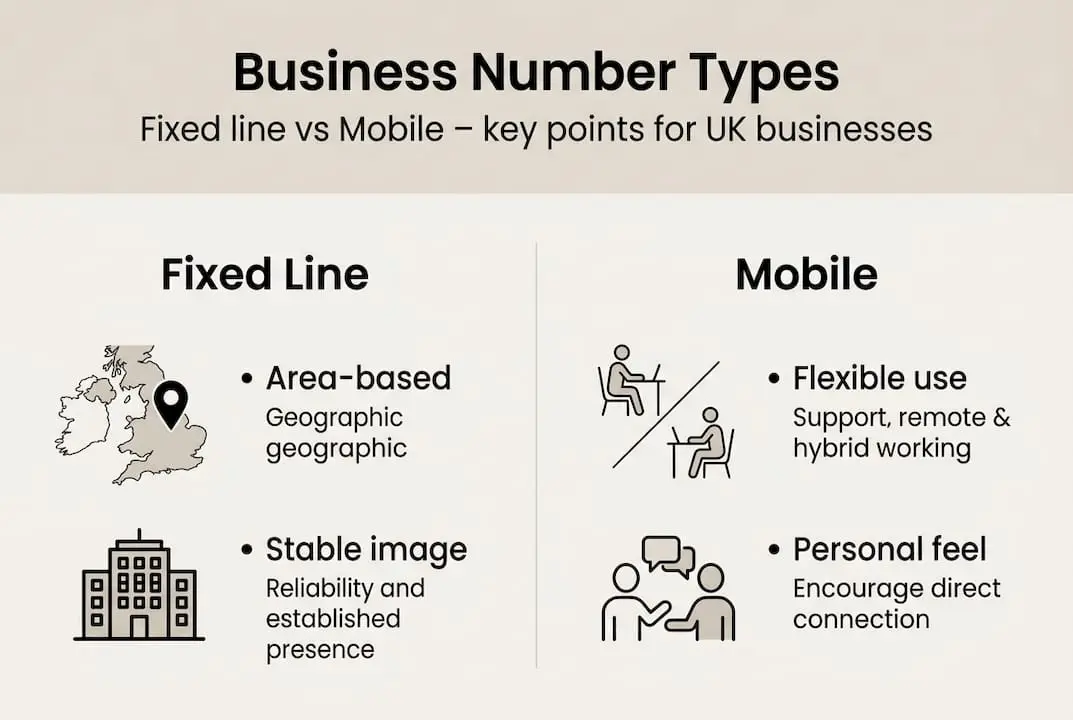
The main differences between mobile and fixed line numbers relate to location association, call quality, and business impression. These are not minor stylistic choices. They directly affect customer behaviour.
Here are the key scenarios where each number type performs best:
- Fixed line number: Best for customer-facing marketing, website listings, Google profiles, and any situation where trust must be established quickly.
- Mobile number: Best for internal team communication, field-based staff coordination, and personal client relationships already established.
- Virtual landline: Best for small businesses wanting fixed line credibility with the flexibility of a mobile lifestyle.
Pro Tip: Do not use your personal mobile as your primary business contact number. It blurs boundaries, reduces perceived professionalism, and makes it harder to manage work-life separation. A dedicated business number, even a virtual one, changes everything.
What most business owners overlook in this business number comparison is the cumulative effect. Every time a customer sees your number, they make a micro-judgement about your business. Over hundreds of impressions, a mobile number quietly erodes the authority you have worked hard to build. A fixed line number quietly reinforces it.
The choice is rarely about technology. It is about the story your number tells before you even answer the call.
Modern fixed line solutions: Virtual landlines and the digital shift
Technology has fundamentally changed what a fixed line number means in practice. You no longer need a physical telephone line installed in your premises to benefit from a geographic number. Virtual landlines have made the advantages of fixed line numbers accessible to any business, regardless of size or location.
Many UK service businesses now use virtual landlines to appear local without a physical line. This is a significant shift. A sole trader working from home in Bristol can display a 0117 number. Calls route directly to their mobile or laptop. Customers see a local business. The trader keeps full flexibility.
The practical features available through modern virtual landline services include:
- Call routing: Direct calls to any device, anywhere in the UK
- Local presence: Display any UK area code regardless of where you physically are
- Voicemail to email: Missed calls converted to written messages instantly
- Call recording: Useful for quality control and dispute resolution
- Multiple extensions: Simulate a larger team even as a solo operator
- Hold music and greetings: Professional caller experience from day one
Adoption is growing fast. Cost-effective virtual numbers are now within reach of even the smallest service businesses, with many providers offering plans starting from just a few pounds per month.
The business case is straightforward. If you want to get more customers with a virtual landline, the investment is minimal and the return in customer confidence is immediate. A memorable geographic number, displayed consistently across all your marketing, becomes a brand asset in its own right.
The digital shift has not made fixed line numbers irrelevant. It has made them more accessible than ever before.
Our perspective: The overlooked value of fixed line numbers in a mobile world
Here is something the digital-first crowd rarely admits: mobile-only businesses are quietly leaving trust on the table every single day.
We have seen this pattern repeat across thousands of UK service businesses. The owner invests in a great website, professional branding, and strong reviews. Then they list a personal mobile number as their main contact. That single decision undermines everything else they have built.
Customers do not consciously think “that is a mobile number, I do not trust them.” It happens at a gut level. The hesitation is real, even if the customer cannot articulate it.
What most digital-first brands miss is that customer perception is built from dozens of small signals, not one big statement. A fixed line number is one of those signals. It costs very little. It communicates a great deal. And managing phone numbers strategically, rather than defaulting to whatever is convenient, is a habit that separates growing businesses from stagnant ones.
The businesses that thrive long-term treat their phone number as part of their brand identity, not an afterthought.
Choose the right business phone number with PhoneNumbers.store
If this article has made one thing clear, it is that your business phone number is far more than a contact detail. It is a statement about who you are and how seriously you take your customers.
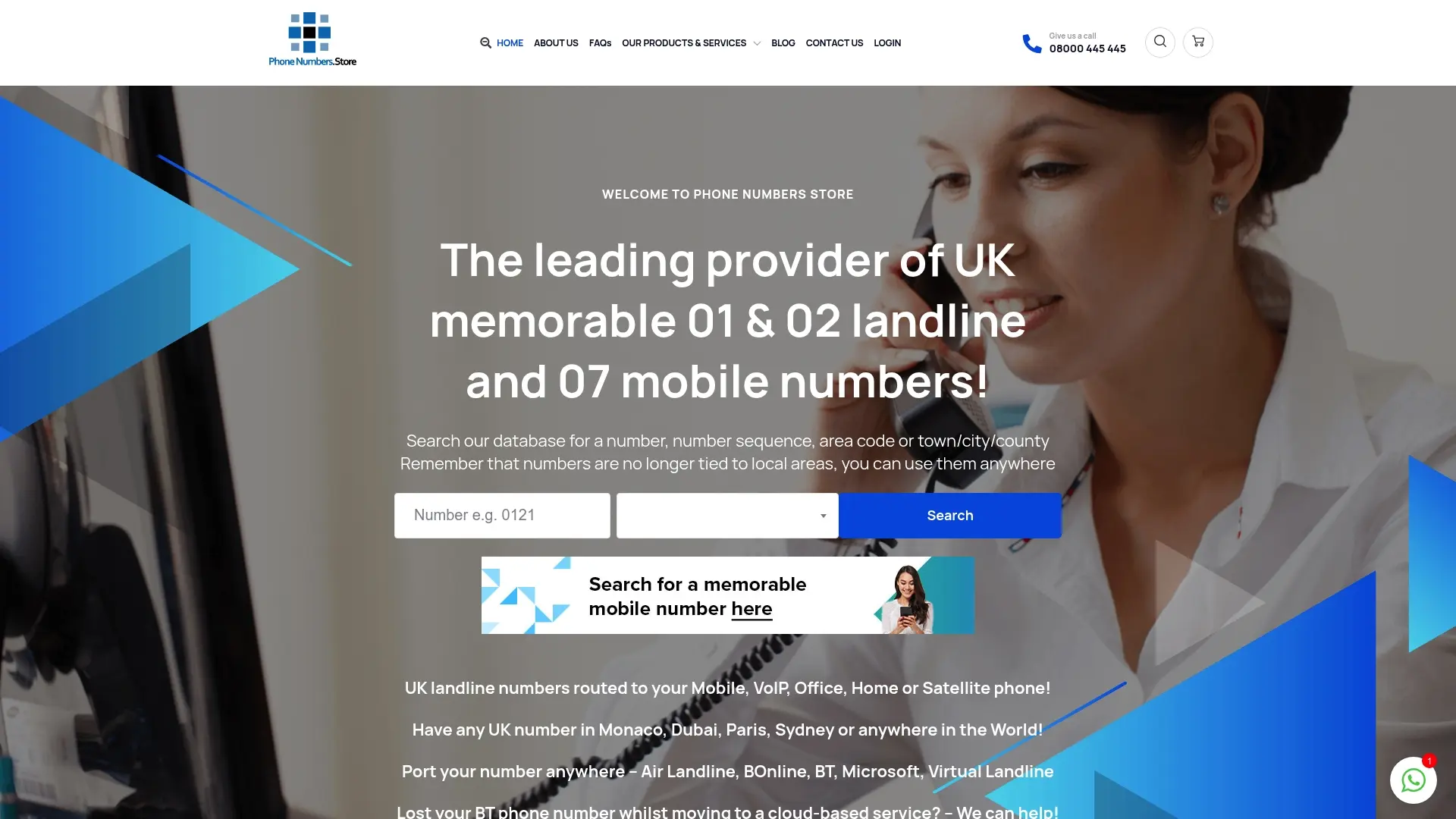
At PhoneNumbers.store, we are the UK’s leading provider of memorable 01, 02, and 07 numbers. Whether you want a specific area code, a number sequence that is easy to remember, or a memorable business number that customers recall after one glance, our searchable database makes finding the perfect number simple. You can search by town, city, county, or area code. And because numbers are no longer tied to physical locations, you can use your chosen number anywhere in the UK. Browse our full range and secure the number your business deserves today.
Frequently asked questions
How do I get a fixed line number for my business?
You can obtain a fixed line number through a major UK telecom provider or, more conveniently, secure a virtual landline online in minutes without any physical installation required.
Is a fixed line number the same as a landline?
Essentially yes. “Landline” and “fixed line” are used interchangeably in most business contexts, and today both can include virtual or cloud-based numbers that behave identically to traditional fixed lines.
Is it worth having a fixed line number if I already use a mobile?
Absolutely. Fixed lines increase perceived professionalism significantly, particularly for service businesses, and using both a fixed line for customer-facing contact and a mobile for personal use is the most effective approach.
Can I move my fixed line number if I change address?
With a virtual landline, yes. Modern virtual numbers offer flexibility beyond physical lines, meaning your number travels with your business regardless of where you are based.
Recommended
- Landline Meaning: What It Means for UK Businesses | PhoneNumbers Store
- Local vs National Numbers – Choosing UK Business Advantage|BM
- Local vs Non?Local Numbers: What It Means for UK Businesses|BM
- Advantages of Local Numbers for UK Businesses | PhoneNumbers Store
- Demivolt | Blog – Business banking for SMEs: services, compliance & cross-border