
A commercial phone number is a telephone number registered and used specifically for business communication rather than personal calls, letting a company route calls, share access across a team, and present a consistent contact point to customers. It sits apart from your mobile or home line legally and administratively. The next sections cover the main types available in the UK, how they’re regulated, and the practical steps to get one.
TL;DR:
- Using a dedicated business number ensures ownership persists through staff changes and enhances customer trust through local or branded presence.
- VoIP and virtual numbers are increasingly popular, offering quick setup, cost savings, and flexibility across different locations and providers.
- Choosing memorable digit patterns over local area codes can improve recall and inbound call volume, especially when the number is owned outright by the business.
- It is advisable to set up call forwarding, voicemail, and analytics to avoid missed calls and maintain professional communication channels.
- Switching existing numbers between providers is routine, but checking porting times and process details before committing prevents service gaps.
Table of Contents
- What is a commercial phone number, exactly?
- Types of commercial phone numbers in the UK
- Why businesses choose a dedicated number over a personal one
- How to get a commercial phone number in the UK
- Why trust this guidance, and where Phonenumbers fits in
- What the numbering rules don’t tell you
- Get a memorable number without the guesswork
- Sources
- FAQ
What is a commercial phone number, exactly?
A commercial phone number belongs to a business, not an individual, which changes how it’s contracted, taxed, and used day to day. Where a personal mobile number is tied to you as a private customer, a business number is typically held on a company account, meaning it survives staff turnover, can be transferred between team members, and often comes bundled with features a personal SIM simply doesn’t offer.
Ownership matters more than most people expect. If a sole trader uses their personal mobile and later hires someone else to answer calls, they’ve got a problem: the number, the contacts, and the call history all belong to one person’s device. A dedicated business number sidesteps that by design.
Most commercial numbers come with a working set of features:
- Call routing and forwarding to multiple staff or departments
- Voicemail-to-email and custom greetings
- Extensions so callers reach the right person without a second call
- Analytics on call volume, missed calls, and peak times
- Shared team access so nobody’s personal phone is the single point of failure
Number allocation in the UK isn’t a free-for-all. Ofcom maintains the National Telephone Numbering Plan, which sets out exactly which digits belong to which category of number, geographic, mobile, or non-geographic, under powers granted by the Communications Act 2003.
Picture a plumber working solo who buys a local 0115 number and forwards it to their mobile. Callers see a local business, the plumber keeps their personal number private, and if they later take on an apprentice, the same number can route to two phones at once.
Types of commercial phone numbers in the UK
Not every business number does the same job, and choosing the wrong type can quietly cost you customers or cash. Geographic 01 and 02 numbers signal local presence, which still carries weight even though Ofcom’s numbering plan no longer ties them to a physical exchange. A trade business in Leeds using a 0113 number reads as local, regardless of where the calls actually land.
Here’s how the main categories break down:
- 01/02 geographic: local trust signal, no longer tied to a physical address
- 03 non-geographic: charged at standard geographic rates, giving a national feel without premium cost
- 0800/0808 freephone: free for the caller, but the business pays for inbound minutes
- 055/056 corporate and location-independent: Ofcom-defined ranges built for organisations that operate across multiple sites
- 07 mobile and business SIMs: portable, personal-feeling, but formally contracted to the company
- VoIP and virtual numbers: run over the internet rather than a fixed line, increasingly the default setup for growing SMEs
Ofcom’s own data confirms 03 numbers are charged at the geographic rate rather than a premium one, which is exactly why they’ve become popular with businesses that want a “no catches” feel for callers. ExpertMarket’s guide to UK business numbers notes that VoIP has become the practical default for many SMEs, since it drops setup costs and lets a business keep a memorable or local-sounding number while operating from anywhere. Our guide to local and national number options breaks down which range fits which growth stage.
Why businesses choose a dedicated number over a personal one
Trust is the obvious one. A customer ringing a local 01 number, a recognisable 0800 line, or a properly branded 03 number reads that business as established, not a one-person operation dialling from a personal handset. Freephone numbers go further, telling the customer the call costs them nothing, which still moves the needle on inbound enquiries for service businesses.
Continuity is the less obvious benefit. Staff leave. Freelancers move on. If the business number lives on a company contract rather than someone’s personal SIM, it doesn’t walk out the door with them, and customer relationships and call history stay intact.
Then there’s the privacy angle, which owners underrate until it bites them:
- A dedicated number stops your personal mobile appearing on invoices, websites, and Google listings
- It creates a genuine boundary between work hours and your own time
- It lets you switch the business phone off without switching yourself off
Pro Tip: Before you commit to any number, check how it handles missed calls. A business number with no voicemail or forwarding is worse than no number at all, because it trains customers to expect silence.
How to get a commercial phone number in the UK
You’ve got four realistic routes, and the right one depends on how established the business already is.
- Keep using your personal number. It’s legal and free, and Gov. The catch: no ownership separation, no shared team access, and you’re stuck if you ever want to hand the number to someone else.
- Move to a business SIM or company contract. Ask the provider about porting timescales (usually a matter of days, though it varies), whether there’s any downtime, and what documents they need to switch the account into the company’s name. A business contract also means invoices land in the company’s name rather than yours personally.
- Buy or rent a memorable number. A provider like Phonenumbers lets you search by area code, digit pattern, or town, then configure the number to forward straight to a mobile, landline, or VoIP system. Setup is typically same-day once the number’s chosen.
- Set up a virtual or VoIP number. These run through an app or desk phone rather than a SIM card, and most providers have you calling within hours of signing up. Our walkthrough on getting a custom business number covers the exact steps.
Whichever route you pick, ask about porting before you commit. Moving an existing number between providers is routine, but timescales and any service gaps vary provider to provider.
Why trust this guidance, and where Phonenumbers fits in
This guide draws on the current Ofcom numbering plan and government guidance on business setup, not on marketing copy from a single provider, because the rules around number ranges and legal ownership are set by regulation, not preference.
It’s written by Rob, a contributor who covers virtual and business number setup for Phonenumbers Store.
Phonenumbers Store itself sells and rents memorable UK numbers and handles the configuration side, forwarding, porting, SIM integration, so a business doesn’t need to untangle Ofcom’s numbering categories alone. A few things worth knowing before you search:
- Numbers are no longer tied to a physical exchange, so a 0161 number works perfectly well for a business based in Bristol
- Numbers can be configured for call forwarding, used with SIM cards, or plugged into an existing telephony system
- They’re portable across providers if you switch later
For background on how local numbers affect customer trust, our piece on the advantages of local numbers for UK businesses goes deeper than this guide has room for.
What the numbering rules don’t tell you
Most explainers on commercial numbers stop at the regulatory definitions, geographic versus non-geographic, freephone versus premium, and leave the actual decision to guesswork. That’s backwards. The rules matter for compliance, but they tell you nothing about which number will actually make your phone ring more often.
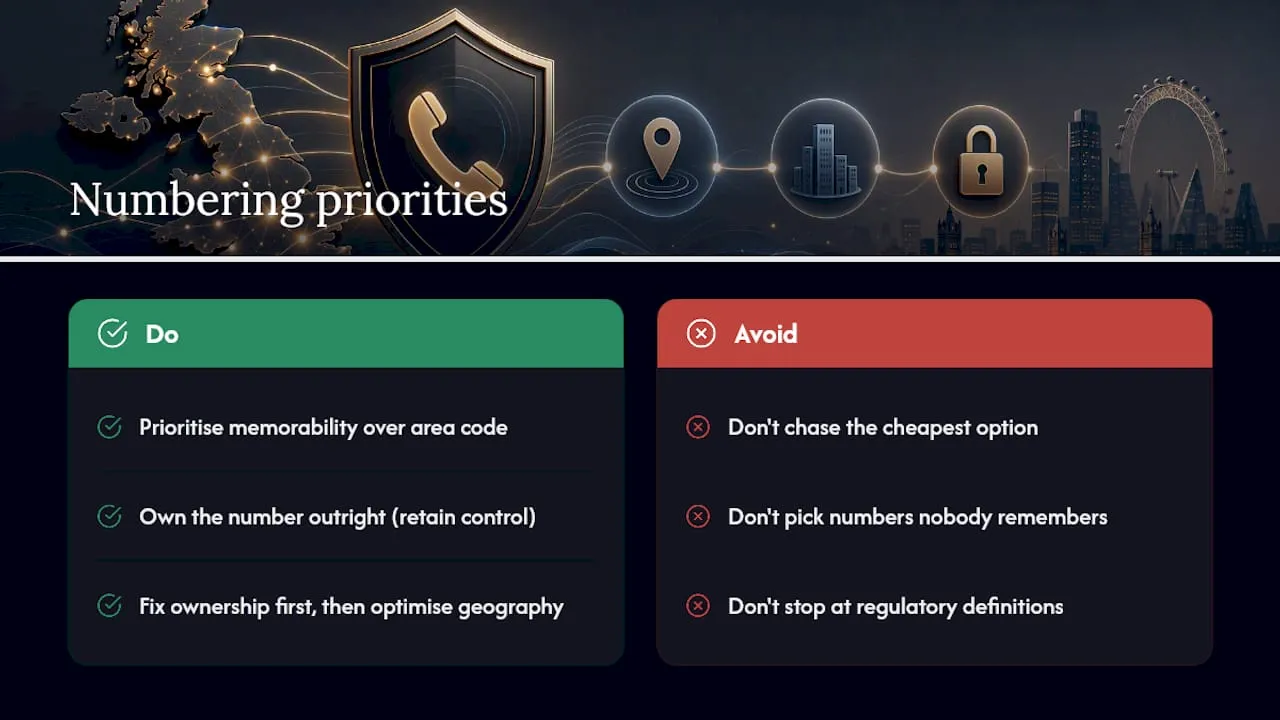
The conventional advice, “get a number that matches your area,” is only half right. A 01 number builds local trust, but a memorable digit pattern builds recall, and recall is what gets you dialled back three weeks later when a customer finally needs a plumber at 11pm. Businesses chasing the cheapest option often end up with a number nobody remembers, which defeats the entire point of having a dedicated line.
If you’re weighing this up, prioritise memorability and ownership before you worry about the area code. A number your team owns outright, one that survives staff changes and doesn’t vanish if a freelancer leaves, beats a slightly-more-local number every time. Get that foundation right first, then optimise for geography.
— Rob
Get a memorable number without the guesswork
If you’d rather not spend an afternoon decoding Ofcom’s numbering categories to pick between a 01, 03, or 0800 range, Phonenumbers does the searching for you. It’s built for sole traders, local trades, and small teams who want a number that’s genuinely memorable, not just technically compliant, and who’d rather configure it in minutes than manage a full telephony migration.
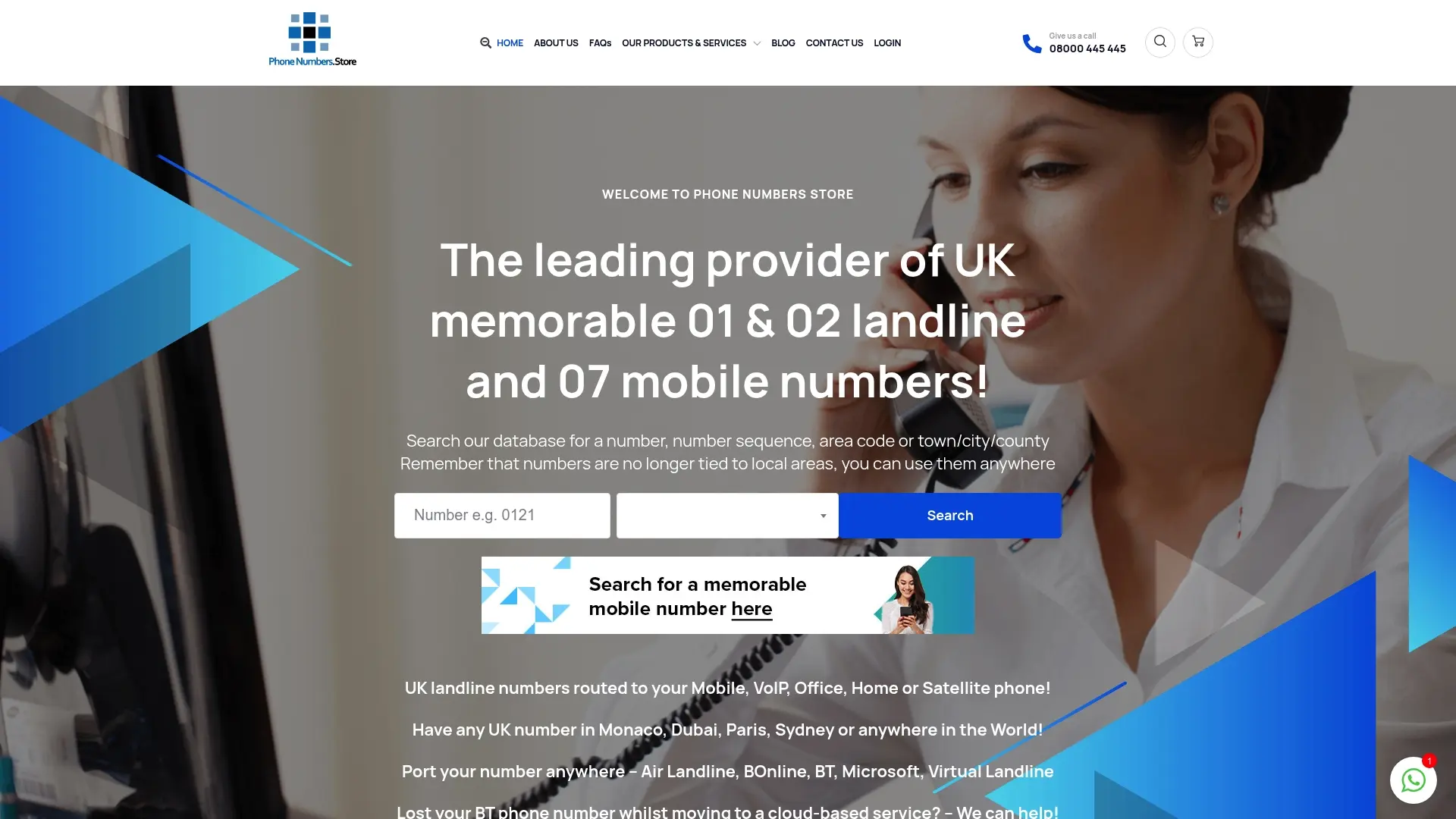
Getting set up takes three steps: search the database by area code, town, or digit pattern; choose a number that suits how you want to be seen (local, national, or freephone); then configure forwarding to your existing mobile, landline, or VoIP system. Numbers are portable across providers, so switching contracts later doesn’t mean losing the number your customers already know.
Browse live options like 01159 456456 or 01159 333555 to see how buying or renting works in practice, or head straight to the Phonenumbers Store to search by your own preferred pattern and get a number configured today.
Sources
FAQ
What is a commercial phone?
A commercial phone number is a telephone line registered to a business rather than an individual, used for customer contact, call routing, and team access rather than personal calls.
Why does my phone number come up as a business?
This usually happens if your number is registered on a business contract, listed on directories under a company name, or flagged by caller-ID databases that cross-reference numbers against business registrations.
How do I get a business phone number in the UK?
You can keep your personal number, move to a business SIM, buy or rent a memorable number through a provider like Phonenumbers, or set up a VoIP or virtual number, each with different setup times and ownership implications.
Can I use my personal phone as a business phone?
Yes, it’s legal, and many sole traders start this way, but it limits ownership and professional features compared with a dedicated business number on a company contract.