
TL;DR:
- Regional phone numbers in the UK are geographic numbers with area codes that identify specific locations for routing and billing. VoIP technology allows businesses to use these numbers from anywhere, decoupling the number from physical location while maintaining regulatory compliance. Using local area codes enhances customer trust and increases call pickup rates, making them vital marketing assets.
A regional phone number is a telephone number whose digit structure contains geographic significance, linking it to a specific town, city, or region within the United Kingdom. The formal industry term is a geographic number, defined by the UK National Telephone Numbering Plan as a number where the area code is used for routing calls and tariffing consistent with a designated geographic area. For UK businesses, understanding this definition is not a technicality. It is the foundation of a local presence strategy that directly affects whether customers pick up the phone.
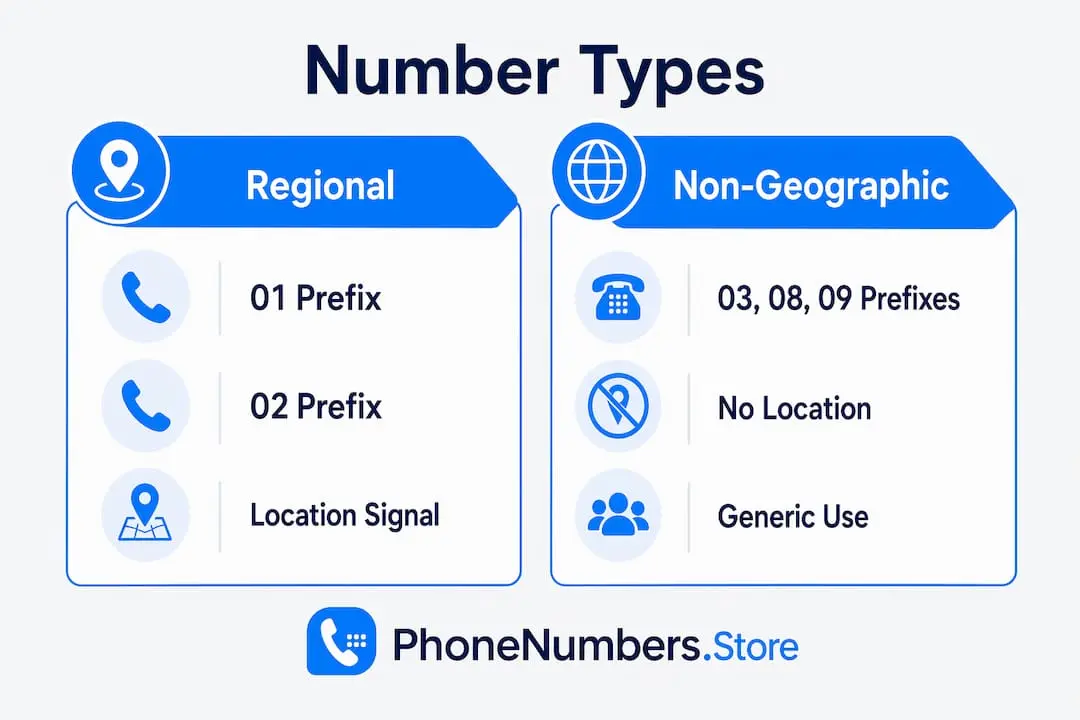
What is the definition of regional phone numbers in the UK?
A geographic number, to use the precise regulatory term, is defined by the UK National Telephone Numbering Plan as a telephone number where the digit structure carries geographic significance for routing and tariffing purposes. The plan, administered by Ofcom, divides all UK telephone numbers into categories: geographic, non-geographic, mobile, and special service. Geographic numbers sit at the top of that list for one reason: they tell the caller exactly where a business is rooted.
The structure is straightforward. Geographic numbers begin with either 01 or 02, followed by an area code that identifies a specific location. The 020 prefix identifies London, 0161 identifies Manchester, 0121 identifies Birmingham, and 0113 identifies Leeds. These area codes are not arbitrary. They are assigned and regulated by Ofcom to maintain consistency in how calls are routed and how callers are billed.
The regulatory purpose matters beyond administration. Geographic designation ensures callers understand the potential cost and perceived origin of a call, even when the physical device receiving that call is located somewhere entirely different. This protects consumers and maintains transparency across the network.
Pro Tip: When searching for a regional number, look up the area code for your target market rather than your registered office location. Ofcom publishes a full list of UK area codes, and Phonenumbers lets you search by town, city, or county directly.
Non-geographic numbers, by contrast, include 03, 08, and 09 prefixes. These carry no location signal. A caller seeing 0800 knows the call is free but has no idea where the business is based. A caller seeing 020 knows immediately they are dealing with a London operation. That distinction is the entire basis of local vs national number strategy for UK businesses.
How do regional numbers work in modern VoIP telephony?
The biggest misconception about geographic numbers is that they must be physically connected to a local telephone exchange. That was true in the analogue era. It is not true now. Geographic numbers are no longer physically tied to a location. VoIP technology and number portability have decoupled the number from the network termination point entirely.
Here is what that means in practice:
- A Manchester business can hold a 020 London number and receive calls on it from any device, anywhere in the country, via a VoIP provider.
- A sole trader in Bristol can operate a 0161 Manchester number to serve a northern client base without opening a Manchester office.
- A start-up with no fixed premises can hold regional numbers for London, Birmingham, and Edinburgh simultaneously, routing each to the same team.
- Number portability rules mean that once you own a geographic number, you can move it between providers without losing the number itself.
Virtual phone numbers allow businesses to hold regional codes from multiple UK cities with no physical presence in those locations. This is not a workaround or a grey area. It is standard practice in cloud telephony and is fully compliant with Ofcom regulations.
The regulatory framework keeps pace with this reality. Regional codes maintain tariff consistency and regulatory clarity even when the physical device is located remotely. Ofcom requires that the geographic designation remains accurate for billing purposes, which is why providers assign numbers to specific area code pools regardless of where the end user sits.
Pro Tip: If you use a VoIP provider to hold a regional number, confirm that the number is assigned from the correct Ofcom-regulated area code pool. A 020 number must genuinely originate from the London numbering range, not be spoofed or rebranded.
The UK dialling plan for 2026 reflects this shift. Geographic numbers are now best understood as location signals rather than location proofs. They tell your customer where you want to be perceived as operating. That perception is commercially powerful.
Why do regional phone numbers improve marketing and customer trust?
Using a local area code significantly increases call pickup rates compared to generic or non-geographic numbers. The reason is psychological. When a customer in Leeds sees a 0113 number calling, they recognise it as local. Familiarity reduces suspicion. Suspicion is the primary reason calls go unanswered.
Area codes act as location-based identifiers that customers process in under a second. That instant recognition builds credibility before the call even connects. For businesses running outbound campaigns, this is a material advantage.
The table below compares the main UK phone number types and their marketing implications:
| Number type | Prefix examples | Location signal | Caller perception | Best use case |
|---|---|---|---|---|
| Geographic (regional) | 01, 02 | Strong | Local, trustworthy | Local marketing, SMEs, branch presence |
| Non-geographic (national) | 03 | None | National, neutral | UK-wide services, charities |
| Freephone | 0800, 0808 | None | Free to call, large company | Customer service, inbound enquiries |
| Premium rate | 09 | None | Expensive, cautious | Specialist services, competitions |
| Mobile | 07 | None | Personal, informal | Direct contact, sole traders |
Businesses gain greater marketing leverage by using regional numbers matched to their target customers’ locations rather than defaulting to their registered office. A solicitor based in Guildford but targeting London clients will perform better with a 020 number than a 01483 Surrey number, because the client base is in London.
Local presence dialling tools display phone numbers with area codes matching the prospect’s location. Sales teams use this tactic to improve cold call answer rates on outbound campaigns. The principle applies equally to inbound: a number that looks local gets more calls than one that does not.
The practical checklist for selecting a regional number for marketing purposes:
- Identify your primary target market by location, not your office address.
- Match the area code to that market. London clients respond better to 020. Manchester clients respond better to 0161.
- Choose a memorable number sequence within that area code to improve recall and word-of-mouth referral.
- Avoid 08 numbers for local marketing. They signal national scale, which undermines local trust.
For a deeper look at how regional numbers affect business visibility, the research consistently points in one direction: local signals outperform neutral ones in local markets.
What are examples of UK regional phone numbers and how do you choose the best one?
Common UK area codes such as 020 for London, 0161 for Manchester, and 0113 for Leeds are the most recognised and commercially valuable regional identifiers in the country. Recognition translates directly to trust, and trust translates to answered calls.
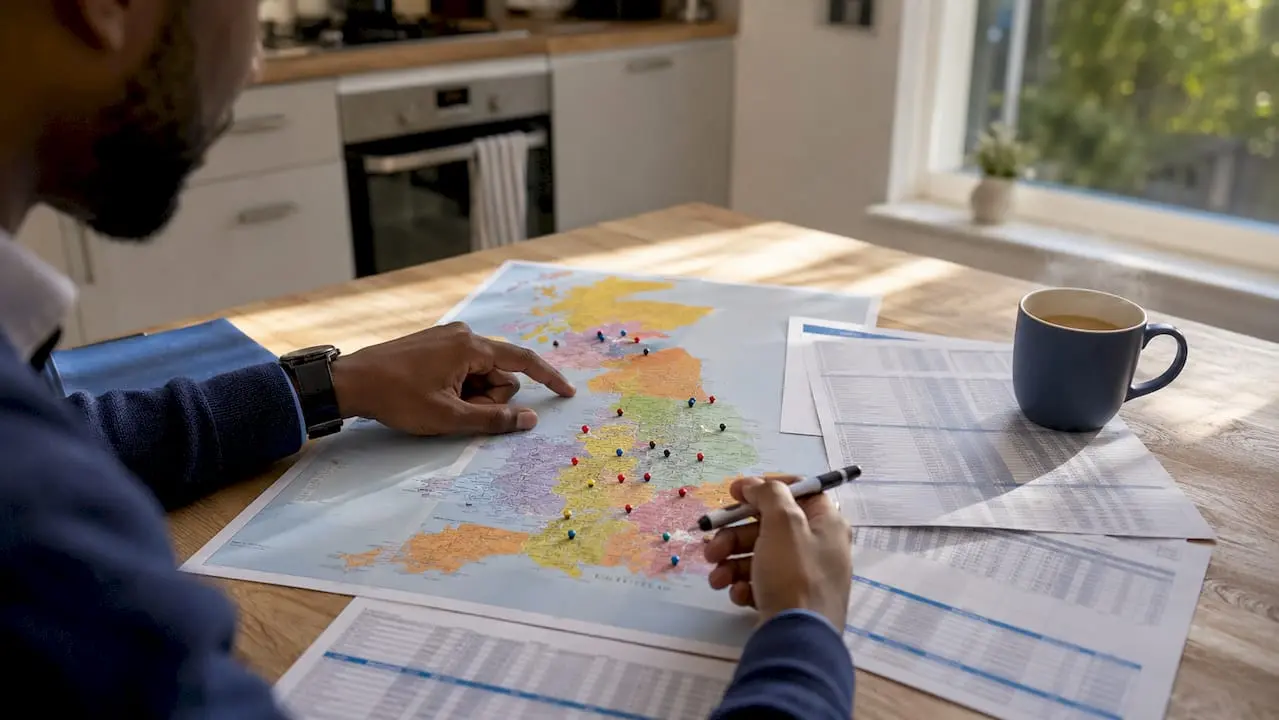
The table below lists the most commercially significant UK regional dialling codes:
| Area code | City or region | Typical use case |
|---|---|---|
| 020 | London | Finance, legal, tech, national HQ presence |
| 0121 | Birmingham | Midlands manufacturing, retail, professional services |
| 0161 | Manchester | Northern England commerce, media, logistics |
| 0113 | Leeds | Yorkshire professional services, financial sector |
| 0114 | Sheffield | Engineering, education, regional SMEs |
| 0115 | Nottingham | East Midlands retail, healthcare, services |
| 0117 | Bristol | South West tech, creative industries, start-ups |
| 0131 | Edinburgh | Scottish professional services, tourism, finance |
| 0141 | Glasgow | Scottish commerce, manufacturing, public sector |
| 029 | Cardiff | Welsh business, public sector, professional services |
Selecting the best regional phone number depends on three factors: where your customers are located, how memorable the number sequence is, and whether the area code carries the right brand associations for your industry.
A memorable number within a strong area code is worth more than an obscure sequence in a prestigious one. A number like 0113 255 0000 is easier to recall from a van livery or a radio advert than 0113 274 3816. That recall advantage compounds over time through word-of-mouth and repeat contact.
Understanding geographic numbers for UK business also means recognising that the 01 and 02 prefixes carry an implicit credibility signal that 03 and 08 numbers do not. Customers associate 01 and 02 numbers with established, physical businesses. That association persists even though the numbers are now fully virtual.
Key takeaways
Regional phone numbers are geographic numbers defined by Ofcom-regulated area codes that signal location to callers and directly influence call pickup rates, customer trust, and marketing effectiveness for UK businesses.
| Point | Details |
|---|---|
| Official definition | A geographic number’s digit structure carries geographic significance for routing and tariffing under the UK National Telephone Numbering Plan. |
| Not location-bound | VoIP and number portability mean regional numbers can be used from anywhere in the UK, fully within Ofcom regulations. |
| Marketing advantage | Local area codes increase call pickup rates by signalling familiarity and credibility to prospects in that region. |
| Choose by target market | Select an area code based on where your customers are located, not where your office is registered. |
| Memorability matters | A memorable number sequence within a strong area code delivers compounding recall benefits over time. |
Why I think most UK businesses are using regional numbers wrong
Most businesses pick a regional number based on where they happen to be registered. That is the wrong starting point. The number is a marketing asset, not an administrative detail. Its job is to make your prospect feel comfortable before they have heard a single word from you.
I have seen businesses in Reading hold 0118 numbers while targeting London clients almost exclusively. The 0118 prefix means nothing to a London buyer. A 020 number would have done the same job on the phone and done it better. The physical office location is irrelevant to the customer. What matters is the signal the number sends.
The other mistake I see regularly is choosing a regional number and then burying it. A memorable 0161 number on a website footer is wasted. Put it on your van, your email signature, your Google Business Profile, and your social media header. The number only builds recognition if it is seen repeatedly.
The future of regional numbers in the UK is genuinely interesting. As VoIP becomes the default infrastructure for business telephony, the geographic number will become a pure brand signal rather than a routing mechanism. Ofcom will maintain the regulatory framework, but the commercial logic will be entirely about perception. Businesses that understand this now will hold the best numbers before the market catches up.
If you are considering a local vs non-local number strategy, my advice is simple: start with your customer’s postcode, not your own.
— Rob
Find a memorable regional number for your UK business
Phonenumbers is the UK’s leading provider of memorable 01 and 02 landline numbers, giving businesses the ability to secure a regional number that is both geographically credible and easy to remember.
Whether you are targeting London with a 020 number, Manchester with 0161, or Leeds with 0113, Phonenumbers lets you search by area code, town, city, or county to find the right fit. Numbers are no longer tied to physical locations, so you can use any regional number from anywhere in the UK. A number like 0113 255 0000 or 0115 928 8888 combines strong regional credibility with the kind of memorable sequence that sticks in a customer’s mind long after the first call.
FAQ
What is the definition of a regional phone number?
A regional phone number, formally called a geographic number, is a telephone number whose digit structure carries geographic significance for routing and tariffing, as defined by the UK National Telephone Numbering Plan. These numbers begin with 01 or 02 and are associated with specific towns, cities, or regions.
Are regional phone numbers still tied to a physical location?
No. VoIP technology and number portability mean geographic numbers are no longer physically tied to a local exchange. A business can hold and use a 020 London number from any location in the UK.
What are the best regional phone numbers for UK businesses?
The most commercially valuable area codes are 020 for London, 0161 for Manchester, 0121 for Birmingham, and 0113 for Leeds, as these are the most widely recognised and trusted by customers in those regions.
How do regional dialling codes improve marketing results?
Local area codes increase call pickup rates because customers recognise them as familiar and trustworthy. Sales teams using local presence dialling report higher answer rates compared to non-geographic or national number formats.
Can a small business use a regional number outside its home area?
Yes. Under Ofcom regulations, any business can hold a geographic number for any UK region and use it via VoIP from any location. This makes regional numbers a practical tool for targeting specific local markets regardless of where the business is physically based.